Aug.26, 2019
|
Innovation and Disruptive Technologies |
Room 16
Audiovisual delivery in 4G / 5G
Cristiano Akamine
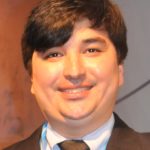
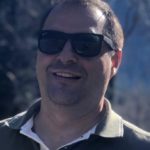
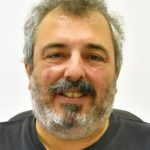
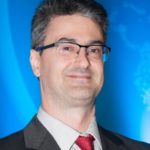
One of the biggest breakthroughs in the audiovisual distribution industry is related to the use of 4G and 5G mobile phone networks. For now, the big question to be solved is how to establish the convergence between broadcasting and broadband. The panel will have five speakers: Professor Brito will explain in a didactic way what 5G technology is, where he will work, what its advantages over the others and its potential for several segments of telecommunications. Vandoros, in turn, will show the project of the European Broadcasting Union (EBU), to which Eurovision is linked, for the transmission of audiovisual content using the 4G/5G. In closing, there will be three case studies: a point-to-multipoint transmission test being conducted in Germany with the 4.5G, to be presented by Aziz; and low latency, augmented reality and 4K/8K virtualized UHD 8K point-to-point Hyper-Video applications by Driesen and Pilati, respectively.
Chair: Cristiano Akamine - Professor, Universidade Presbiteriana Mackenzie
Cristiano Akamine received the Ph.D. degree in electrical engineering from the State University of Campinas, Brazil, in 2011. He is a Professor with Mackenzie Presbyterian University, where he is a Coordinator of Digital TV Research Laboratory. He is a member of the Board of the Brazilian Digital Terrestrial Television Forum and Society of Brazilian Broadcast Engineers (SET). He works in the ISDB-TB broadcasting standardization and holds several patents, licensing of intellectual property, numerous articles published and has a Brazilian scientific grant of Productivity and Technological Development and
Innovative Extension—Level 2 from the National Council of Technological and Scientific Development. He has also served as a reviewer for several periodicals and conferences and has participated as a Guest Editor in the Special Issue Point-to-Multipoint Communications and Broadcasting in 5G of IEEE Communications Magazine and the Special Issue on 5G for Broadband Multimedia Systems and Broadcasting of IEEE Transactions on Broadcasting. He currently serves as an Associate Editor of IEEE Transactions on Broadcasting.
His research currently focuses on digital terrestrial broadcasting, software-defined radio, channel codes, embedded systems, and 5G.
Broadcasting and 5G - EBU/ES View
This panel aims to give an overview on the EBU studies for 5G and the main applications from remote production to final distribution.
João Vandoros - Consultant, EBU
Joao Vandoros is in charge of Eurovision Services in Brazil, the operational company of EBU. He is post-graduated in Telecommunications by Unicamp and got his bachelor degree as Electrical Engineering at Mackenzie University. Since 2000, has been working in Broadcasting Engineering, focusing his carrier in the content contribution and distribution segment.
5th Generation of Mobile Communications Networks - Challenges, Opportunities, and Threats
The fifth generation (5G) of mobile communications networks promise to revolutionize the telecommunications sector, offering scenarios of use hitherto not contemplated in previous generations. In this presentation, we discuss the scenarios of use expected for 5G networks, defining their performance requirements and typical applications, as well as the technological trends for the standardization of these networks. Also, we discuss the challenges for the implementation of 5G networks, as well as the opportunities and threats they can bring to the various segments of telecommunications.
Jose Marcos Camara Brito - Professor, INATEL
José Marcos C. Brito received the B. S. degree in electronic and telecommunications engineering from National Institute of Telecommunications (Inatel), Brasil, in 1986 and the M. Sc. and Ph.D. degrees from Campinas University (Unicamp), Brasil, in 1998 and 2003, respectively, both in electrical engineering. He has worked as a professor at Inatel since 1986, since 1990 as a full professor. He has occupied several management positions at Inatel: General Manager of Research & Development Center, Post-Graduation Coordinator, Research & Post-Graduation Director, and General Vice-Director. Currently, he is the Research & Post-Graduation Director at Inatel, the General Coordinator of Radiocommunication Reference Center at Inatel, the Secretary General of 5G Brasil Project at Telebrasil and the Coordinator of the courses Master’s and Doctorate in Telecommunications at Inatel. His research & development interests include 5G networks, telecommunications systems, digital communications, and performance analysis of telecommunications networks.
LTE/5G Broadcast - Technology Insights
The deployment of LTE and widespread adoption of smartphones have opened up new opportunities in mobile communications for operators to consider. In addition, nowadays the introduction of LTE/5G Broadcast could open up a worldwide market with millions of smartphones and tablets acting as potential TV receivers able to combine linear and non-linear mobile TV services. This can be offered by leveraging the enhanced broadcasting capabilities of LTE/5G networks via the High Power High Tower model. This overlay network approach is capable of delivering connectionless Mobile TV services via applying FeMBMS 3GPPP Release 14 allowing Lower Latency & Higher Flexibility. Now, FeMBMS technology is capable to make broadcasters and content providers broaden their reach via improving their coverage, enhancing bandwidth efficiency and having more real-time focused applications through implementing simplified architecture and providing UHD Mobile TV services to billions of users daily via LTE/5G networks.
Mohamed Aziz Taga - Product Manager for LTE/5G Broadcast&Transmitter System, Rohde & Schwarz
Professional Experience
Master Degree in Computer Networks & Telecommunication
2015 National Institute of Applied Science & Technology, Tunisia
Mobile Core Network Specialist & Technical Trainer
2015 Nokia Networks, Worldwide
Product Manager for LTE/5G Broadcast & Transmitter Systems
Since September 2018 Rohde & Schwarz GmbH & Co.KG, München
Technical Expertise
EPC & IMS Networks/ VoLTE / VoWIFI / FeMBMS / LTE & 5G Broadcast
xSRVCC / SDM / NFV
8K and Video Related Services in 5G
Video services will be redefined by the 5G technology. The era of Hyper-Video, featuring ultra-fast transmission (5G), ultra high definition (8K), and deep intelligence (AI) is coming. With the 5G ultra-fast and low latency transmission, the traditional video services are transformed into new wireless video services, which are moving us to a new era of video application. This presentaion explores this 5G and video related scenario
Tarcisio Bruneli Pilati - Manager - Pre Sales, ZTE
Manager of the Pre Sales department at ZTE since 2011; responsible for products and solutions of all telecom tecnologies. Specialist in 5G and Access Networks
Work in Telecommunications for 25 years, always working for world liders like Siemens, Nokia and nowadays ZTE
Graduated in Electrical Engineering by FEI and Master Degree in Telecom Networks by Mackenzie University
5G is NOW! The ultimate video experience!
The talk will interactively address Huawei's 5G end-to-end solution architecture and share 4K, 8K, AR, VR and Cloud gaming cases and applications using 5G.
Nicolas Driesen - Network Solution, Huawei from Brazil
Chief Technology Expert at Huawei Brazil, has extensive experience in deploying mobile and fixed networks in national and international carriers. Master in Business Administration from INSPER and telecommunications training specialized in the development and implementation of innovation projects and new connectivity technologies.
|
Aug.27, 2019
|
Innovation and Disruptive Technologies |
Room 12
TV 2.5: DTVPlay, HDR and Immersive Audio
Leonardo Chaves
Chair: Leonardo Chaves - Transmission Technology Manager at TV Globo
Currently, I am the Transmission Technologies Manager at TV Globo and coordinator of Technical Module in Forum SBTVD. I had the BSc in Electronic and Computing Engineering at Federal University of Rio de Janeiro (UFRJ), and MSc. of Electrical Engineering at the same university. I've got the MBA Management in Catholic University in Rio de Janeiro (PUC-Rio).
Keynote Speaker: José Marcelo Amaral - President of the Brazilian Digital TV System Forum / Director of Engineering and Operations - RecordTV
With a degree in Mathematics from FAHUPE-RJ, a graduate degree in Information System from PUC-RJ and FGV-SP and an MBA in Information Technology from USP-SP, José Marcelo do Amaral has made an extensive contribution to the broadcasting sector. He joined Record TV in 1991 and is today the director for Engineering and Operations. At the television station he has developed systems for the radio and TV commercial operations area; implemented a system for producing news; managed the integrated management system (ERP) project and created a system for monitoring audiences from mobile devices, among other tasks. As technology director he has participated in initiatives for implementing non-linear editing, digital archiving and tapeless work flow systems. During this period, he has also become involved with issues referring to digital video and video transmission using internet protocols (IP). He was Director of the Free-To-Air TV Segment at SET (the Brazilian Society for Television Engineering), his principal challenge being to develop digital television technology for Brazil, and he is responsible for its implementation and expansion throughout the entire Record group. Amaral’s role also involves the Brazilian Digital TV System Forum, where he currently holds the position of President of this institution founded in 2006. One of his most challenging projects was the launch of the R7 portal, which is now the second-largest internet portal in Brazil. During his career he has also had the opportunity to head up the technical and operational planning and coordination of major sporting events broadcast by Record TV, the Guadalajara Pan-American Games (2011) Toronto (2015), the London Olympics (2012), Sochi (2014) and Rio (2016).
Paulo Henrique Castro - Technology and R&D Director / TV Globo
Engineer by the Pontifical Catholic University of Rio de Janeiro in 1996 (PUC-Rio). Working with Globo since 1996, where started on an internship program.
Responsible for the standardization of the Digitial TV in Brazil. -Coordinator of the Audio and Video Coding Working Group of the SBTVD Forum. -Chairman of the ABNTCommitee for Digital TV (Associação Brasileira de Normas Técnicas, Brazilian ISO Branch). -Contact point for Subgroup A – Specifications, on the Brazil-Japan Joint Work Group for Digital Television iniciative -Member of SET (Sociedade Brasileira de Engenharia de Televisão) since 1996. Also a member of many societies of IEEE(CommSoc, BTS, MTT, CE) and SMPTE
HDR: From Dream to Mainstream
In this presentation, Patrick Griffis, SMPTE, will review some of the theory and resulting practice leading to the successful mainstream deployment of HDR in the market today in television, mobile devices and even computers.
The presentation will include animations defining concepts such as “Perceptual Quantizer”, “Color Volume” and “Content Mapping” which are key to understanding HDR.
Pat Griffis - President of SMPTE / Vice President Technology, Office of the CTO at Dolby Laboratories
Pat Griffis is President of the Society of Motion Pictures and Television Engineers (SMPTE) as well as Vice President Technology at Dolby. He is also Board member on the Ultra HD Alliance and Vice President of the UHD Forum. He past President of the IEEE Consumer Electronics Society. He holds 10 patents
Broadcast experience with MPEG-H Audio Immersive and Personalized Audio
Already adopted by ATSC 3.0 and DVB, MPEG-H Audio was most recently selected by the SBTVD Forum for delivery of Immersive and Personalized Sound over the existing ISDB-Tb platform. A number of successful trials conducted during major live events across the world, have showcased the importance of interactive features in broadcast and how easy can be enabled in live production, even for the most complex events.
Adrian Murtaza - Senior Manager, Technology and Standards - Fraunhofer IIS
Adrian Murtaza serves as Fraunhofer’s Standards Manager in a number of industry standards bodies, including DVB, ATSC, CTA HbbTV and SCTE, and is the co-author of multiple specifications in those groups. Adrian Murtaza joined MPEG in 2013 and since then contributed to development of various audio technical standards in MPEG-D and MPEG-H.
More recently he focused on specification of Next Generation Audio delivery and transport in ATSC 3.0 systems and MPEG-2 Transport Stream based DVB systems, as well as on enabling of MPEG-H Audio services in different broadcast and streaming ecosystems. With a strong interest in VR/AR media solutions he is actively involved in MPEG-I efforts targeting future immersive applications.
TV 2.5: The new thing in the Internet of Things?
Prof. Marcelo Moreno, DSc. - Department of Computer Science (DCC / ICE) Federal University of Juiz de Fora (UFJF)
Marcelo F. Moreno is an Associate Professor at Federal University of Juiz de Fora (UFJF), where he is a permanent member of the Computer Science Postgraduate Program. He holds Master and Doctorate degrees on Informatics from PUC-Rio. He holds leadership roles in the International Telecommunication Union (ITU), including the rapporteurship of ITU-T Question 13/16 (Multimedia application platforms and end systems for IPTV), the co-chairmanship of IRG-IBB (Intersector Group on Integrated Broadcast-Broadband), the vice-chairmanship of ITU-T Study Group 16 (Multimedia) and the editorship of many ITU-T Recommendations and technical papers. He is also a coordinator of the Middleware Working Group at the Brazilian Digital TV System Forum (SBTVD). He has a solid history of publications and presentations in both Academia and Industry events.
|
Aug.28, 2019
|
Innovation and Disruptive Technologies |
Room 11
Artificial Intelligence for AV Production
Daniel Monteiro
We live in the information age. Data volume is growing exponentially and we are expected to have more than 16 zetabytes of data (16 trillion gigabytes) by 2020. In this new era, devices are increasingly getting more connected and sensors are generating continuous streams of data. Artificial intelligence technologies, especially Deep Learning, have prepared to handle unprecedented data volumes and made room for incredible applications with images, audio, and video. In this panel we will address current and futuristic applications of artificial intelligence in content production, what are their implications on the companies, ethical issues, and how to get prepared for the future.
Chair: Daniel Monteiro - R&D Manager - TV Globo
Electronic Engineer by UFRJ and M.Sc in Digital Signal Processing by Coppe / UFRJ, having the area of video compression as a research topic. He has been working in the Research and Development / Innovation area of TV Globo's technology since 2000, where he currently serves as the sector manager. In 2002 he worked in the research center of Japanese TV NHK conducting research with the H.264 compression standard, in the occasion in the stage of standardization. Passionate about new technologies and innovation management, with many years of experience in software development, today leads a creative team that conducts research and projects mainly in the areas of signal processing, artificial intelligence, virtual reality, computing, electronics and IoT
The use of Artificial Intelligence to boost content production: Globo case studies
Nowadays, many Artificial Intelligence (AI) applications exist around us and we use them normally without realizing them. AI is mostly perceived as a new tool capable of optimizing and enhancing processes through automation in ways that were unthinkable in the recent past. Advances in this area have enabled manufacturers and broadcasters to develop smarter tools and applications to drive the entire content lifecycle. In this talk, we present how the use of Deep Learning and NLG (Natural Language Generation) techniques are impacting the creation, productivity and delivery of multimedia content broadcast by TV Globo.
Cassius Rodrigo, R&D Supervisor, TV Globo
Cássius R. D. Estrada was born in Rio de Janeiro, Brazil. He received the Electronic and Computer Engineering degree from Federal University of Rio de Janeiro (URFJ), Brazil, in 2008, and the M.Sc. degree in Electrical Engineering from the Federal University of Rio de Janeiro (COPPE/UFRJ) in 2011.
He was a TV Systems Researcher at Rede Globo between 2006 and 2015. He is currently Executive Supervisor of Exploratory Research at Rede Globo. He has experience in Electronic Engineering and Computer Science, with emphasis on Signal Processing, working mainly on the following topics: image processing, video coding, digital TV and video quality evaluation.
ML and AI in Content Preparation
This presentation is about what you need to know about using machine learning and artificial intelligence in content preparation. Are you thinking about automatic clip or full-text metadata creation? Why is training so important? Different tools have different strengths. Come find out about the questions you should ask when considering this for your workflow.
Nadine Krefetz - Consultant, Reality Software
Nadine Krefetz is a streaming media consultant and industry journalist. She works with companies to strategically plan how vendors and media companies can compete. She is originally from NYC, lived in Canada for 25 years and is now in Seattle, the city of two clouds (soon to be three, based on the title of the new Google building). Please reach out via Linkedin (https://www.linkedin.com/in/
nadinekrefetz) or read her articles on
StreamingMedia.com (http://www.streamingmedia.com/
Authors/6837-Nadine-Krefetz.htm)
How Artificial Intelligence Can Be Used in the Creative Communication Process
Practical and real examples of the use of Artificial Intelligence and Big Data techniques in communication projects.
We will know cases of use of these techniques in various moments of a project. from the generation of insight, content, personalization, humanization and understanding of information.
Paulo Henrique de Almeida - CEO - Casion Tech Goodies
Over 12 years working with technology for financial market, Paulo was responsible for creating mathematical models for managed portfolio analyzes and processing of investment fund quotas. Today, works on innovation, artificial intelligence and digital media performance for clients such as Heineken, Santander, Spotify, Catho, among others.
|
Aug.28, 2019
|
Innovation and Disruptive Technologies |
Room 11
Voice Assistants and Chatbots: The New Consumer Relationship
Marcelo Guerra
How is established the new form of communication and interaction using voice and chatbots assistants, enabling potential new businesses and models.
Chair: Marcelo Guerra - Manager of Technology in Digital Media at TV Globo
Hands-on IT/Broadcast executive, as Digital Media Technology Manager leading multidisciplinary team for digital media transformation program, composed of teams from Technology Architecture, Big Data, BI, Projects, R&D, Support, Applications, Telecommunications, Innovation, Media Operations and Platforms, through WBS construction, delivery plans, follow-up meetings, documentation, integration points, risk analysis and conflict resolution.
Working on the TV and digital media market since 2005, experienced in partnerships, project management and processes, with national and international awards.
Amazon Alexa
Amazon Alexa - the new frontier of the voice.
José Nilo Cruz Martins - Country Manager Alexa Skills at Amazon
José Nilo Cruz Martins currently works at Amazon's Brazil office as Country Manager for Alexa Skills & AVS. From 2011 to 2018 he was Country Manager of AWS's operations in Brazil. At Google, from 2007 contributed to the launch of the operation "Google Enterprise" in Brazil. He was the general manager in Brazil of the software company Ariba in 2001. He is Brazilian, native of São Paulo.
Let's Talk?
With so many messages we receive every day, how can we stand out? Smart contact can make a brand more present in your customer's journey.
Luis Motta - UX Customer Success – Take
UX Designer at Take, with experience of designing smart contacts for well known brands such as Globo, Caixa Seguradora, Heineken and Porto Seguro. Also, winner of the first Chatbot hackathon in Brazil
Globo: a new journey in the world of voice assistants
In the coming years, voice commands will change the way we communicate and consume content. Globo has already begun to experiment how to deliver unique experiences for voice assistants. In this keynote, Globo will share what to have in mind when designing a new voice app.
Eliseu Barreira Junior - Digital Media Coordinator at TV Globo
He is currently Digital Media Coordinator at Globo TV. He has been managing projects for voice assistants, such as Google Assistant, since 2018.
|
Aug.29, 2019
|
Innovation and Disruptive Technologies |
Room 13
Media Research and Development – A Global View
Fernando Bittencourt
According to the latest data from UNESCO, the global investment in R & D are estimated at 1.7 trillion dollars. The five countries that invest the most in R&D are, in order, the United States, China, Japan, Germany and South Korea. Together, the 3 Asian countries account for over 36% of all global investment. In relation to GDP, Japan and South Korea are among the countries that invest the most in research. And, not coincidentally, they are among the countries with the largest number of scientists per million inhabitants: 5,328 and 6,856 respectively (Brazil has 881).
In China, the growth of research funding has been exponential. From 13 billion dollars in 1991 reached 410 billion in 2016, ie 30 times more. And it is already speculated that by 2020 it may overtake the United States.
Much of these investments in research done by these Asian countries have gone to the area of ICT – Information and Communications Technology, including therein Broadcasting and Media sector.
Facing this scenario, we invited two eminent researchers Kohei Kambara (NHK – Japan) and Jian Song (Tsinghua University -China) to talk about recent developments in their countries. We also invite our colleague from Rede Globo, Carlos Eduardo Cosme Ribeiro, who will bring us the results of his R&D experience in South Korea.
Chair: Fernando Bittencourt - Former President of SET
Fernando Bittencourt is a Former President of SET and a Former General Manager for Engineering at TV Globo. Graduated in Electronic Engineering from the Federal University of Rio de Janeiro (UFRJ) Beginning in 1994, he was Coordinator of the SET/ABERT group created by the ABERT and SET to study and plan the implementation of Digital TV in Brazil. He was a full member of the Council for Social Communication in the Brazilian Senate, as an engineer with renowned knowledge in the field of social communication. Participates in the Deliberative Council of the Forum on the Brazilian Digital TV System. He is also a member of the IEEE, IBC and the SMPTE.
Co-chair: Cristiano Akamine - Professor, Universidade Presbiteriana Mackenzie
Cristiano Akamine received the Ph.D. degree in electrical engineering from the State University of Campinas, Brazil, in 2011. He is a Professor with Mackenzie Presbyterian University, where he is a Coordinator of Digital TV Research Laboratory. He is a member of the Board of the Brazilian Digital Terrestrial Television Forum and Society of Brazilian Broadcast Engineers (SET). He works in the ISDB-TB broadcasting standardization and holds several patents, licensing of intellectual property, numerous articles published and has a Brazilian scientific grant of Productivity and Technological Development and
Innovative Extension—Level 2 from the National Council of Technological and Scientific Development. He has also served as a reviewer for several periodicals and conferences and has participated as a Guest Editor in the Special Issue Point-to-Multipoint Communications and Broadcasting in 5G of IEEE Communications Magazine and the Special Issue on 5G for Broadband Multimedia Systems and Broadcasting of IEEE Transactions on Broadcasting. He currently serves as an Associate Editor of IEEE Transactions on Broadcasting.
His research currently focuses on digital terrestrial broadcasting, software-defined radio, channel codes, embedded systems, and 5G.
NKH OPEN HOUSE - "taking media beyond the box."
NKH OPEN HOUSE is the annual public event featuring broadcasting technologies and services under development at NHK's STRL - Science & Technology Research Laboratories.
These research is based on three major pillars, namely Reality lmaging - technologies that deliver content with more realistic feel and presence, Connected Media - technologies to improve program production and provide better user experience leveraging the internet, and Smart Production -technologies for efficiently producing programs using artificial intelligence (AI)
In this talk we will present some highlights of this exhibition.
Kohei Kambara - Senior Researcher Engineer - STRL NHK
Kohei Kambara started working as an engineer of NHK in 2001. Since then, he has been engaged in the research works of ISDB-T system at NHK’s Science & Technology Research Laboratories (STRL). From 2009-2019, he worked at several NHK’s regional broadcast stations to construct local terrestrial transmitting station sites. In between those works, he has participated in ITU-R SG6 meetings and contributed his technical knowledge and experiment to the related ITU-R Recommendations or Reports. He is now working on next generation terrestrial broadcasting system at STRL as a senior researcher engineer of the advanced transmission systems research division.
Digital Television / Terrestrial Multimedia Broadcasting (DTMB) Standard and its Advanced Version
The technical review of Chinese Digital Terrestrial Television Broadcasting Standard named Digital Television Terrestrial Multimedia Broadcasting (DTMB) and its advanced version DTMB-A will be presented. It includes the general description on the physical layer transmission protocol including the frame structure, channel coding and modulation schemes with the highlight on the core technologies. Measurement results are also provided for the performance validation together with possible extended applications.
Jian Song - Director of DTV Technology R&D Center - China
Dr. Jian Song received his B. Eng. and PhD degrees from Electronic Engineering Department, Tsinghua University, China, and conducted Postdoctoral research work in Hong Kong and Canada in 1996 and 1997, respectively. He worked in USA for seven years, and joined Tsinghua University in 2005 as a full professor. He is now Director of DTV Technology R&D Center, one of major technical contributors for Chinese DTV standard.
He is vice chairman of WP6A of International Telecommunication Union (ITU) and the founding Editor-in-Chief of ITU academic Journal, ICT Discoveries. He is the Associate Editor of IEEE Transaction on Broadcasting.
Dr. Song’s current research interest includes digital broadcasting, network convergence, and integration of visible light and powerline communications. He is the recipient of the Best Paper Award of IEEE Transactions on Broadcasting in 2015, and also the recipient of several national and provincial/ministry level awards.
Dr. Song has published over 260 peer-reviewed journal and conference papers with good citations. Dr. Song is the Fellow of IEEE, IET, and Chinese Institute of Electronics.
TV 3.0: ETRI Research Initiatives and Opportunities in Brazil
In the first semester of 2019 the speaker visited the ETRI - Electronics and Telecommunications Research Institute, in South Korea, to study research lines on TV3.0 and using ATSC 3.0 format. The lecture will address the experience of visiting the ETRI and the research lines studied with application to the Brazil context.
Carlos Eduardo Cosme Ribeiro - Technology Specialist IV R&D - TV Globo
Carlos Eduardo has a degree in Electrical Engineering Enf. Telecom, UNESA. He has a postgraduate degree in Control and Automation Engineering, UGF and in Computer Network Specialization, PUC Rio. He has been in Globo network since 1999. He is currently Specialist in the area of Transmission Technologies. Among its main activities are the planning and control of preventive, predictive and corrective maintenance in RF (terrestrial and satellite) and optical fiber audio, video and data transport systems. Developer and responsible for Network Management System (NMS) for monitoring transport systems.audio, video and data.
|