|
|
KEYNOTE SPEAKER |
Room 1
The New Power of Content: How LinkedIn Is Redefining Reputation, Influence, and Business
On LinkedIn, it’s not enough to be present—you need to be perceived. In the age of artificial intelligence and the attention economy, the content you share has become the most strategic asset of your career and your brand.
Keynote Speaker:
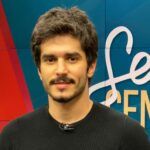
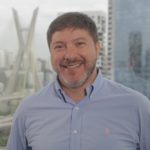
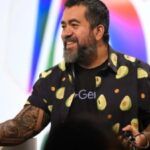
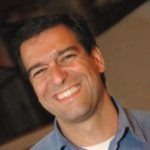
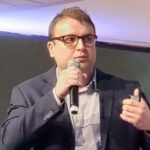
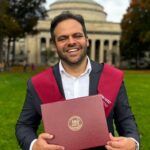
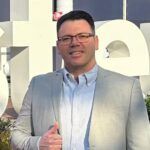
Luiz Gustavo Ribeiro,
Community Manager, LinkedIn
Luiz Gustavo is a journalist, strategist, and educator with a dynamic presence across multiple fronts of communication. Named in Meio & Mensagem’s 30 Under 30 list, his strength lies in his versatility—he makes complex topics accessible with clarity and intention, engaging different generations in meaningful conversation. As Community Manager at LinkedIn, he leads initiatives that elevate expert voices and spark impactful dialogue. At ESPM, he heads an original course on communication and personal branding, and on his social platforms, he shares thought-provoking insights on the future of work, purposeful influence, and the evolving role of communities.
|
|
|
Connectivity |
Room 1
The Future of Connectivity: Wi-Fi 7, 6G, TVWS, NTN, and D2D
Discover how emerging technologies (Wi-Fi 7, 6G, and NTN) are transforming the way we connect, driving innovations, and redefining possibilities for the industry. Join experts to uncover the impact of these technological revolutions in an increasingly interconnected world.
Chair:
Fernando Wiktor,
Telecom Solutions Manager, Globo
In his 26-year career, he has worked in the areas of projects, operations and support, carrying out highly relevant deliveries, such as connectivity solutions for 4 World Cups and 2 Olympics. He is currently responsible for the teams that develop and implement projects in the areas of local networks, WAN and in the cloud, security and telecom solutions for broadcast.
Presentation on the Evolution of Wireless LAN Communication and AIOps
Speaker:
Marcio Pilotto,
Engineering team manager at Juniper for Latin America.
Marcio Pilotto is a telecommunications engineer who graduated from the Fluminense Federal University in Rio de Janeiro. He has been active in the technology market for the past 30 years, working at companies such as Cisco Systems and, for the last 18 years, at Juniper Networks (recently acquired by HPE). Marcio holds several industry certifications, including Cisco’s CCIE and Juniper Networks’ JNCIP, among others.
6G Networks: New Ways to Provide Connectivity with Spectral Flexibility
Speaker:
Luciano Leonel Mendes,
Professor at the National Institute of Telecommunications (Inatel)
Luciano Leonel Mendes holds a Bachelor's degree in Electrical Engineering and a Master's degree in Telecommunications from the National Institute of Telecommunications (Inatel), earned in 2001 and 2003, respectively. He completed his Ph.D. in Electrical Engineering at the State University of Campinas (Unicamp) in 2007. Since 2001, he has been a professor at Inatel, teaching undergraduate and graduate courses, and has served as the technical manager of the Hardware Development Laboratory and as the coordinator of the Master's program in Telecommunications. He currently leads research activities at the Radiocommunication Reference Center (CRR), overseeing studies in 5G and 6G technologies. He also serves as the research coordinator for the Brazil 6G Project and general coordinator of xGMobile – the Embrapii-Inatel Competence Center for 5G and 6G Networks. Additionally, he represents Inatel in the One6G Association. His main areas of expertise include mobile communications and multicarrier modulation techniques.
When the Sky Is Not the Limit: NTN, D2C, 6G and the Expansion of Connectivity
Speaker:
Alberto Boaventura,
Telecom Digital Infrastructure and Strategic Technology Advisor
With over 30 years of experience in the telecommunications industry, Alberto Boaventura has a solid academic background and extensive technical and strategic expertise. He holds a Master’s degree in Electrical Engineering (PUC-Rio) and an MBA in Corporate Finance (IBMEC). His career spans service providers, equipment manufacturers, and more recently, consulting, where he has gained broad experience in strategy, innovation, and the implementation of new technologies in leading organizations. He served as Coordinator of the Frequency Thematic Group for the Brazil 5G Project and as Deputy Chair of the technical group at GSMA Latam, promoting regulatory alignment and technological advancement across the region. His career is distinguished by strong technical leadership, ecosystem engagement, and active contributions to the progress of digital connectivity.
|
|
|
Streaming in Focus |
Room 2
Technological Convergence: Synergies Between Streaming and DTV+ for the New Era of Content Distribution
The evolution of the digital media ecosystem has fostered unprecedented convergence between streaming technologies and digital terrestrial television systems, particularly with the advent of DTV+ and TV3.0. This panel explores the emerging synergies between these distinct technological stacks, demonstrating how traditionally separate distribution channels can mutually benefit through the integration of their infrastructures and technical capabilities.
The discussion will address three fundamental pillars of this convergence: first, the evolution of advertising insertion strategies through Server-Guided Ad Insertion (SGAI), which represents a hybrid approach between SSAI and SCAI architectures, offering new possibilities for personalization and interactivity that benefit both streaming and traditional broadcast. Second, the implementation of MPEG-5 LCEVC (Low Complexity Enhancement Video Coding) as an enabling technology that optimizes content delivery in both OTT environments and TV3.0 systems, providing encoding efficiency and superior visual quality with lower computational complexity. Third, the strategic integration between TV3.0 and streaming through solutions that combine interactivity, personalization, and artificial intelligence, creating scalable and data-driven experiences.
The panel will demonstrate how these converging technologies are redefining content distribution paradigms, enabling traditional broadcast operators to expand their capabilities into the OTT universe, while streaming platforms can leverage established distribution infrastructures to optimize costs and reach. Practical implementation cases, overcome technical challenges, and future opportunities for complete integration of these technological ecosystems will be presented.
Chair:
Igor Macaubas,
Coordinator of the Streaming GT - SET | Director of Product and Engineering, Digital Products, Globo
Igor leads the engineering, product management and operations of Globo's Digital Products - Globoplay, Premiere, G1, GE, Gshow & BBB, just to name a few. Over the past few years, he has managed deliveries that brought millions of users to Globo's Internet platforms, such as Big Brother Brasil, the Olympics, and the World Cup, deliveries that have made Globo internationally recognized for its technical excellence and record digital audiences.
The market's shift toward advertising solutions through implementation for SGAI.
In the short term, the industry has shown a shift toward advertising solutions through the implementation of a new approach known as SGAI. This approach represents an intermediate implementation between SSAI and SCAI architectures, both of which are already widely adopted across various streaming environments. Like any emerging methodology, SGAI carries its own set of pros and cons depending on the existing scenarios, along with numerous technical challenges—from adoption across major protocols (such as HLS and MPEG-DASH) to availability within media players. Understanding the drivers of personalization and interactivity in ad delivery, and assessing the true benefits of implementing these new architectures, lies at the heart of this matter.
Speaker:
José Schulz,
Head of Digital Streaming and TV 3.0 - Hub Digital, Globo
Electronic engineer graduated from UFRJ, master's degree in computational optimization from Coppe, MBA in finance from Coppead and with 19 years of experience developed in various areas at Globo. He led teams and implementations in areas such as Research & Development, Technology Projects, Governance & Strategy, globoplay and is now responsible for the Digital Streaming and TV 3.0 teams within the Digital Hub. Its main focus currently is to transform the audio/video consumption of Globo's digital products, leading to a ubiquitous, unique and differentiated experience, and on the design of the new application environment under construction for broadcast and broadband TV 3.0.es in construction of a technically viable solution for the delivery of DAI in the open TV environment, within the current digital terrestrial TV standard and the prospects for this delivery already in the TV 3.0 environment.
MPEG-5 LCEVC (Low Complexity Enhancement Video Coding)
This session will introduce MPEG-5 LCEVC (Low Complexity Enhancement Video
Coding), explain how it works, and show how it can benefit video services—especially in
Brazil’s TV 3.0 initiative, but also for OTT streaming and satellite delivery. The session will
also help participants understand how to build a video workflow using LCEVC, and what
tools and licensing models are available.
Speaker:
Simone Ferrara,
SVP, Technology & IP Strategy at V-Nova
Simone Ferrara is SVP of Technology & IP Strategy at V-Nova, a London-based technology company developing hierarchical, compute-aware visual data formats for AI, media and immersive applications. V-Nova's technologies are at the heart of Brazil's DTV+, the world's first national broadcast standard to mandate both MPEG-5 LCEVC and VVC.
At V-Nova, Simone has been central to developing LCEVC - as inventor, researcher, and standardisation lead - and played a key role in the SBTVD Forum engagement that brought both technologies into DTV+. He leads V-Nova's IP and technology strategy, including licensing and standards, as well as AI research and innovation programmes exploring how structured visual data can improve the efficiency of AI training and inference.
Before V-Nova, he held IP roles at Vodafone and leading IP law firms. He holds engineering degrees from Politecnico di Milano and Washington University in St. Louis, and a certificate in IP law from Queen Mary, University of London.
TV3.0 and Streaming
The arrival of TV 3.0 marks a new stage for Brazil’s broadcasting ecosystem, emphasizing interactivity, personalization, and integration with digital platforms. This new model demands solutions that combine streaming, data, monetization, and interactive experiences—enabling broadcasters and brands to deliver content in a more connected, scalable, and data-driven way. The evolution of television is no longer purely technical, but strategic—linking technology, audiences, and business in real time.
The streaming market has grown far beyond simple video transmission. Today’s most advanced solutions incorporate content management, multi-platform distribution, efficient monetization, and applied artificial intelligence. AI plays a central role in this ecosystem, optimizing everything from automatic video indexing to personalized recommendations and real-time audience analysis. The focus is on scalable, personalized, and data-oriented experiences that strategically connect content, business, and audience.
Speaker:
Marco Lopes,
CEO, Mediastream Brasil
Marco Lopes is the CEO of Mediastream Brazil, a mediatech company specializing in streaming, audio, video, and OTT solutions. He is also a partner at Innovideas, a consulting firm focused on technology and innovation. With a solid career in telecommunications, technology, internet, marketing, and sales, he has served as CMO of TIM Brazil, Executive Vice President at GVT (now Vivo), and at Positivo Tecnologia. He also held the role of General Director for Latin America at the Mobile Marketing Association (MMA), and was a member of Unilever’s Global Digital Advisory Board for eight years.
|
|
|
360 Production |
Room 3
Telling and Creating “New” Stories Through the Use of AI
The use of Artificial Intelligence as a means of creating and producing content is already a reality!
This panel invites knowledge-sharing, reflection, and debate on the power of AI as a major assistant in content creation and production—highlighting real-world experiments and use cases currently in operation, alongside the exchange of experiences from professionals working directly within today’s Media Supply Chain.
Chair:
Fábio Ferraz,
Director of Media Solutions, Globo
Director of Technology for Media Solutions at Globo and SET Board Member, Fábio Ferraz has been supporting the media industry's digital transformation through innovation, experimentation, and acceleration among manufacturers, developers, and other stakeholders across the Media Supply Chain ecosystem. At Globo, he leads a team responsible for the architecture, projects, development, and 24/7 operation of all solutions and applications in the Content Production Chain. Currently, alongside his peers, he is spearheading the creation of the so-called “Architecture of the Future” for the Media Supply Chain—redefining platforms for pre-production, production, post-production, media preparation, and broadcasting. Fábio has been with Globo for 13 years, in addition to 12 years of prior experience in the industry, including at TV Educativa and EBC.
Speaker:
Adonias Melo,
Head of Media Platform and Metadata - Globo
A technology executive at Globo, he serves as Head of Media Platforms and Metadata, leading strategic initiatives involving artificial intelligence applied to audiovisual content. With over 18 years of experience in the Media and Entertainment sector, he drives the software-centric transformation of production and distribution workflows, leveraging data and AI to enhance efficiency, quality, and innovation. He holds a degree in Network Engineering, two MBAs in Management and Project Management, and certifications in agile methodologies, artificial intelligence, cloud computing, networking, and IT service management.
Speaker:
Fernando Castelani,
Consulting Account lead, Google Cloud
With over 20 years of experience in the media industry, working on large-scale digitization and digital transformation projects, he has worked for companies like Harris (Imagine), leading modernization projects for various media groups in Brazil. Later on, he led technology teams at the Disney Group, and currently, he is involved in Google Cloud activities related to adopting the Cloud as a transformative tool for traditional Media Supply Chain workflows, with a focus on improving efficiency, scalability, culture, and innovation.
Speaker:
Carlos Octavio de Alexandre Queiroz,
Vice President, SET
Director of Architecture, Partnerships, Data/AI Stragey, Globo
Executive with over 25 years of experience in the Media Industry, bringing robust expertise in Technology and Strategy. Carlos holds a Master's degree in Software Engineering and an MBA in Business Management.
Centralized Production: innovating and optimizing the architecture, operation, and production methods
The future of content production, centralizing processes and services to gain scalability and productivity. The challenges of this model, the industry’s gaps, and how content creators can benefit frofrom this new phase
Speaker:
Marcelo Bossoni,
Technology Director for Content Production at Globo
He leads the Technology Operations for News, Sports, and Entertainment content. With 17 years at Globo, he began his journey in Technology Projects and has since held key roles in News Operations in São Paulo, Drama Production at Globo Studios, and at Globo Minas. Recently, he has driven major cultural and technological transformations within the organization. His core focus areas include Centralized Production, Cloud-based Operations, New Operational Models, and enhancing team performance in adopting cutting-edge technologies.
|
|
|
CyberShield |
Room 4
DTV+: Cyber Threats to the Future of Television
With the evolution of the DTV+ ecosystem, a wide range of new features will become available on the TV of the future.
This panel will explore the cybersecurity threats that could impact this emerging technology and discuss possible strategies for risk mitigation.
Vinícius Brasileiro,
Information Security Strategy, Governance and Risk Manager, Globo
Bachelor's degree in Computer Science and Accounting, with a specialization in IT Auditing and certified as a Certified Information Systems Auditor (CISA), Certified Information Security Manager (CISM), and Certified in Risk and Information Systems Control (CRISC) by ISACA, Certified Chief Information Security Officer (CCISO) by EC-Council, and Certified Business Continuity Professional (CBCP) by DRI International. Vinícius has 20 years of experience in the areas of information security, governance, risk, and compliance. He is currently the Coordinator of the Information Security Working Group at SET, Vice President of ISACA Chapter Rio de Janeiro, guest lecturer at PUC-PR, and leads the Security Strategy and Risk area at Globo.
Speaker:
Rodrigo Almeida Gonçalves,
Director of Information Security, Globo
Executive MBA from COPPEAD - UFRJ and a Bachelor's degree in Computer Science from UFMG,
he has over 20 years of experience in Information Security and Infrastructure. He has worked in companies across a wide range of industries and currently leads the Information Security team at Globo.
Speaker:
Alex Viana,
Cybersecurity and IT Infrastructure Manager, RECORD
Professional with a Master's degree in Systems Technology Management from Centro Paula Souza (FATEC São Paulo), an MBA in Information Security, and a Bachelor's degree in Computer Networks. He has 22 years of experience in IT Infrastructure, holding certifications from Cisco, Microsoft, Exin, among others. For the past 12 years, he has specialized in Information Security, with experience in companies from the technology, retail, and broadcasting sectors. He has also worked as a university professor at institutions such as UniSant'Anna, IBTA, Impacta, and FMU. Currently, he manages the Information Security and IT Infrastructure departments at RECORD.
Speaker:
Adriano Ornellas,
Information Technology Manager, SBT
Adriano Ornellas has nearly 35 years of experience in the technology sector and currently serves as the Information Technology Manager at SBT.Throughout his career, he has held leadership roles at companies such as School360° Inteligência Educacional, Cognita Schools, Saint Francis College, Whirlpool, HP, Sadia, and financial institutions including Chase Manhattan Bank, ING Baring, ABN Amro Bank, Conductor, and Validata.
He has led IT departments, managed on-premises, cloud, and SaaS infrastructures, and overseen deployment and migration projects for systems and platforms such as CRM and ERP. Adriano has built support and information security teams and restructured entire technology departments.
With strong expertise in IT governance and frameworks like ITIL, COBIT, and ISO 27000, he excels in managing digital transformation projects. His work includes modernizing processes and infrastructure, adopting agile methodologies, integrating educational platforms, ensuring LGPD compliance, and training teams. Adriano helps companies align technology with business strategy, driving innovation, resource optimization, and the implementation of cutting-edge enterprise systems.
Speaker:
Marcelo F. Moreno,
Associate Professor, Federal University of Juiz de Fora (UFJF) | Technical Module of the SBTVD Forum
Associate Professor at the Federal University of Juiz de Fora (UFJF), Brazil, with a Ph.D. in Computer Science from PUC-Rio and expertise in multimedia systems and computer networks. He was a Visiting Professor at the International Audio Laboratories Erlangen (FAU/Fraunhofer IIS) in 2022–2023. He co-edited ITU-T Recommendation H.761 (“NCL and Ginga-NCL”) and has contributed to several international standards, having chaired ITU-T working groups for over a decade. Since 2015, he has coordinated the Application Coding Working Group of the Brazilian Digital TV System Forum (SBTVD), where he also serves as editor of ABNT standards for TV 2.5 and TV 3.0. His research bridges academic innovation and standardization, with a focus on application-oriented broadcasting, second-screen integration, audience measurement, and privacy-aware media platforms for next-generation digital TV.
|
|
|
Connectivity |
Room 1
Broadcast + Broadband: The Collision of Two Worlds That Is Transforming Content Distribution
We are living through an unprecedented transformation, where two previously isolated universes — Broadcast and Broadband — collide to redefine content distribution. This panel dives into that convergence, which is breaking barriers, reshaping our infrastructure, and paving the way for innovations that will profoundly transform how we conceive and use platforms.
Chair:
Carolina Duca,
Director of Infrastructure and Telecom, Globo
Engineer and Master in Digital Transmission Systems, has been working for over 10 years in the area of content production and distribution. She is currently responsible for Globo’s telecommunications area.
Speaker:
Fernando Bonifacio (Boni),
Digital Development Manager, SBT
With 20 years of experience in the broadcast market, he is a development manager at SBT, leading the +SBT streaming platform and the digital portals of SBT and Grupo Silvio Santos. He has a degree in Audiovisual, Digital Design and Computer Engineering, and an MBA in Cloud Engineering and Architecture. During his professional career, he has worked for renowned companies such as ESPN and Rede Record, participating in special coverage such as the Wacken Open Air Festival (2008), the Pan American Games in Guadalajara (2011) and the London Olympic Games (2012). Passionate about innovation, he combines technology and creativity to deliver unique digital solutions.
Speaker:
Robin Hérin,
Director of Standardization at Ateme
Robin Hérin is a Director of Standardization within the CTO Office at Ateme, where he helps the Research & Innovation team develop future technologies for video processing and delivery, and drive partnership projects and standardization.
Now in his ninth year at Ateme and his career, Robin has previously worked in both South & North America as a Solutions Architect before moving to NY and focusing on expanding Ateme’s footprint in the North-East, including the first Ateme POCs & deployments in both ATSC 1.0 & 3.0.
Robin holds a master’s degree in mechanical engineering from the Université de Technologie de Compiègne (France).
Speaker:
Alexandre Hotz,
Executive Director of Engineering – SKY/Vrio
Alexandre Hotz is an Electrical Engineer with a specialization in Digital TV and Satellites from Inatel, and holds a Master’s degree from USP in the fields of electromagnetism and power systems.
As Director of Engineering at DIRECTV Latin America, he is responsible for DTH transmission systems, satellite fleet, network infrastructure, mission-critical infrastructure, and the development of CPE and ODU for DTH. He also oversees the distribution infrastructure for the SKY+ and DGO streaming platforms.
Alexandre has been with SKY/DIRECTV for 25 years and has over 32 years of experience in the technology industry.
|
|
|
IA Insights |
Room 2
Artificial Intelligence in Audiovisual: From Technical Tool to Creative Partner
This panel brings together experts to discuss the transformation of artificial intelligence in the audiovisual sector, highlighting its evolution from an automation tool to an active creative agent in production processes. The discussion covers everything from advances in editing and post-production software to the use of generative AI in the creation of original content and the personalization of audiovisual experiences.
The panel will present the impacts of AI on creative and collaborative workflows, with concrete examples of how broadcasters and independent producers are integrating these technologies to enhance human capabilities, streamline processes, and develop more accessible and intelligent narratives.
It fosters a cross-cutting dialogue between cutting-edge technological solutions, innovations in generative AI, and practical applications in professional environments—reflecting the new audiovisual landscape driven by artificial intelligence.
Chair:
Fernando Moreira,
Coordinator of the SET Working Group on Artificial Intelligence
Fernando Moreira holds a Ph.D. in Communication and is a university professor, researcher, and consultant specializing in audiovisual technology and applied Artificial Intelligence.
With more than 35 years of experience in the audiovisual industry, he has worked extensively in university television, corporate production, technological innovation, professional training, and project management. He served as President of ABTU (Brazilian Association of University Television), founded and directed one of Brazil’s leading university television stations, and has led initiatives focused on integrating AI, broadcasting, education, and emerging audiovisual languages.
He is the founder of Broadcast Media Lab, where he develops innovation projects, professional training programs, and AI solutions for the audiovisual and broadcasting ecosystem.
Fernando is also the Coordinator of the Artificial Intelligence Working Group at SET (Brazilian Society of Television Engineering).
Present & Future of Content Creation with Adobe Generative AI
The lecture will present an overview of Adobe’s artificial intelligence strategy and its profound impact on the content creation industry, where companies are seeking not only to explore, but also to optimize the safe use of ever-evolving generative technologies.
Speaker:
Luis Bechtold,
Senior Field Specialist - Adobe Enterprise | Pro Video Team
Luis Bechtold works in Adobe's Enterprise strategic team as a Senior Field Specialist in the area of professional video and post-production, with a focus on broadcast, film, advertising, social media and emerging technologies. With more than 20 years of experience in the Digital Media Industry, Luis works in business development with companies and partners in the audiovisual sector, driving innovation through the use of AI in technologies for the creation and management of digital content.
Artificial Intelligence in Post-Production: Tools, Techniques, and Trends
AI tools are evolving at a fast pace and reshaping the landscape of audiovisual post-production. In this talk, we’ll explore this evolution, focusing on technologies for video generation and editing assistance.
Featuring examples of recent AI-driven projects for film and television, the presentation invites the audience to discover how these tools are becoming powerful allies in the creative and technical processes of audiovisual production.
Speaker:
Eduardo Calvet,
Director and producer of documentaries, advertising films and virtual reality
Eduardo Calvet holds a Master's degree in Creative Media from the Federal University of Rio de Janeiro (UFRJ) and is a professor at FACHA, having also taught at UFRJ. A director and producer of documentaries, commercials, trailers, and virtual reality projects, he has directed and produced more than a dozen audiovisual works selected for renowned festivals such as the Venice Biennale, Annecy International Animation Film Festival, Rio Festival, São Paulo International Film Festival, and Gramado Film Festival.
At TV Globo, he played a creative role in major promotional campaigns for drama productions and sports programming, contributing to projects that received more than 160 awards, including Clio Awards, One Show, New York Festivals, Golden Ring Awards, and Promax Awards.
Co-speaker:
Nelson Porto,
Photographer, AI Art Director, XR Specialist
Nelson Porto is an artist, photographer, and specialist in Virtual Reality and Generative Artificial Intelligence applied to the audiovisual industry. Through photography, technology, and immersive storytelling, he explores new forms of creation and interaction with reality.
He participated in the Emmy Award-winning documentary Awavena (2020) and is the co-creator and co-producer of Tinta & Fogo, a virtual reality exhibition about the prehistoric rock paintings of Serra da Capivara, which received Best VR awards at the Laval Virtual and Cinequest festivals.
Since 2019, he has focused on the use of Generative AI in audiovisual production and, since 2023, has dedicated himself full-time to teaching and developing customized AI workflows for the audiovisual industry. His work spans film productions, documentaries, visual mapping projects, and immersive experiences.
His AI-based artistic works have been exhibited at SP–Arte through Bianca Boeckel Gallery and at Brisa Gallery in Lisbon. He also teaches courses, delivers lectures, and conducts workshops on AI, technology, and innovation at events such as Rio2C, Rio Innovation Week, and POW Festival, as well as institutions including Sebrae, Casa Firjan, ECO-UFRJ, MIS-RJ, and the Paraná Audiovisual Industry Association.
Since 2024, he has served as AI Editor at Meio, where he develops AI-driven image and video creation workflows, writes about the subject, and contributes to specialized training programs.
Reasoning Platform – A New Concept for Managing, Integrating, and Generating Media and Data into Relevant Information for Content Creation and Production
The lecture will explore perspectives and opportunities for innovation in how content production chains are created and operated, leveraging the potential and scale enabled by AI-powered tools.
Through validated experiments and hypotheses, the speaker will present an internally developed platform known as Globo Genius, which is now taking on the role of Assistant to content creators and editing teams.
The speaker aims to leave the audience with key reflections on the role of AI as an assistant—rather than a replacement—in the creative and operational processes.
Speaker:
Fábio Ferraz,
Director of Media Solutions, Globo
Director of Technology for Media Solutions at Globo and SET Board Member, Fábio Ferraz has been supporting the media industry's digital transformation through innovation, experimentation, and acceleration among manufacturers, developers, and other stakeholders across the Media Supply Chain ecosystem. At Globo, he leads a team responsible for the architecture, projects, development, and 24/7 operation of all solutions and applications in the Content Production Chain. Currently, alongside his peers, he is spearheading the creation of the so-called “Architecture of the Future” for the Media Supply Chain—redefining platforms for pre-production, production, post-production, media preparation, and broadcasting. Fábio has been with Globo for 13 years, in addition to 12 years of prior experience in the industry, including at TV Educativa and EBC.
|
|
|
360 Production |
Room 3
Podcast is live! But what about the Content—how do I create it?
The format has won over Brazilians and is now part of the daily routine of millions of listeners and viewers.Yet, even with the style maturing and the habit solidifying, the debate remains:
What are the challenges of producing in this genre?
How do you stand out amidst so many options and keep things original?
Is it really that easy and simple to produce?
And beyond that—how far can new technologies take content creation?
These are just some of the questions we’ll explore with incredible guests who live and breathe the podcast universe—whether in audio or video.
Chair:
Roberto Hoffmann,
Technology and regulatory project manager at RBS TV
Electrical engineer, with an emphasis on automation, graduated from Unisinos. He has been working for over 15 years in broadcast and telecommunications companies, with extensive experience in management systems projects, multiservice networks and in IT and Broadcast platforms. He has worked on deployments in Brazil and Latin America, having worked at Claro, Deutsche Telekom and Smartcom PCS. He is currently manager of technology projects and regulatory at RBS TV Porto Alegre.
Speaker:
Leonardo Cabral,
Technology Manager, Globo
Head of Technology Solutions for Media Supply Chain and Content at Globo, with 20 years of experience in the Media & Entertainment industry. Currently focused on transforming the sector through the application of artificial intelligence across products, platforms, and projects involving developers, creators, and other players in the content creation and production ecosystem.
Speaker:
Bruno Vargas,
Director of Photography, Host of the CineMasters Podcast, Partner at HUB Locadora, and Consultant in the audiovisual market
Host of the CineMasters Podcast, involved in projects spanning advertising, agribusiness, cinema, fashion films, manifestos, content creation, music videos, DVDs, and distance learning (EAD) training programs.
Has worked in various states across Brazil, Latin America, the United States, and Europe.
In addition to work on set, shares expertise through workshops and consulting services for companies and professionals in the audiovisual industry.
Speaker:
Fabio Angelini,
Commercial Director for Brazil and Latin America at Pinnacle Group & Blackmagic Design Ambassador in Brazil
With 25 years of experience in the audiovisual market, has served as a technical video editing consultant, demonstrator, and instructor for Pinnacle Systems, as well as a sales engineer for NewTek and Matrox in Brazil.
Currently holds the position of Commercial Director at the Pinnacle Group and serves as a Brand Ambassador for Blackmagic Design in Brazil.
|
|
|
CyberShield |
Room 4
Practices for Secure Development in DTV+
In DTV+, channels become applications.
In this new environment, the concept of security by design, applying secure development requirements, is essential to ensure a safe ecosystem.
This presentation will highlight the key considerations for developing secure applications.
Presenter | Speaker
Thiago Lotufo,
Information Security Specialist, Globo
Technology professional with nearly 10 years of experience, including the last 5 years focused on Information Security and application security.I have strong expertise in analyzing, identifying, and mitigating vulnerabilities in web and mobile applications, applying security best practices from the early stages of development through testing and validation in production environments.
|
|
|
SET Express |
Room 1
Broadcasting and Connectivity: The Union of Networks for an On-Demand World
This panel explores how the convergence between traditional broadcast networks and on-demand connections is transforming media consumption. It addresses technological integration, regulatory challenges, infrastructure, and the impact of the ubiquity of personalized content driven by digital platforms.
Chair:
Francisco Martins Portelinha Júnior,
Executive Manager of Research, Development, and Innovation (PDI) at the Inatel Competence Center (ICC)
He is currently the Executive Manager of Research, Development, and Innovation (PDI) at the Inatel Competence Center (ICC), focusing on embedded solutions and connectivity. With over 15 years of experience in developing digital technologies and applying them across sectors such as agribusiness, healthcare, industry, and telecommunications, he brings deep expertise in analog and digital hardware, embedded and edge computing, IoT, mobile connectivity, broadcasting, and software-defined radios (SDR). His work also spans applications in Artificial Intelligence and Machine Learning. He integrates applied research with technology transfer to the market, driving digital transformation across diverse production chains.
On the streaming route
“On the Streaming Route” offers a comprehensive overview of the industry, focusing on up-to-date data on audience trends, business model penetration, and consumption behavior. Based on market research, it reveals how different audience profiles engage with platforms. It also explores the challenges and opportunities for content creators, distributors, and brands. A must-see guide for anyone looking to understand the present and future of streaming.
Speaker:
Henrique Rodrigues,
Head of Market Intelligence LATAM, FABRIC
Over 20-year experience in the main media and entertainment companies with Research, Data & Analytics, Business Intelligence, CRM, Digital, Sales Strategy and Insights.
5G technology support for TV production - Use cases
The advent of 5G technology marks a transformative moment for the media and entertainment industry, offering ultra-fast connectivity, low latency, and high data traffic capacity. For television broadcasters, 5G opens up new possibilities in both content production and distribution, enabling greater agility, mobility, and operational efficiency.
This presentation aims to highlight the key benefits of 5G for broadcasters, showcasing real-world use cases across various applications within broadcasting environments.
Speaker:
Guilherme Saraiva,
Director of Media and Satellite Sales, Claro Empresas | SET Advisor
I am a technology and digital products executive. Over the past few years, I have worked on digital transformation projects, leading initiatives focused on operational efficiency, improving customer experience, creating new revenue streams through digital products, and building partner ecosystems.
I have built my career over 30 years in national and international media and telecommunications companies such as Telecine, Globosat, British Telecom, NET, and Vicom. Throughout this journey, I participated in three company merger processes, actively involved in both the sale and integration phases.
I specialize in product development and management, complex project management, and client relationship management. I hold a degree in Telecommunications Engineering from IME, and MBAs in Marketing and Finance from FGV. I have completed specialization courses in project and process management at PUC and in pricing strategy at IBMEC. I am currently pursuing an MBA in Big Data and Artificial Intelligence at PUC.
QoE – Quality Of Experience
Quality of Experience is probably the most important item defining the ability of the Service Provider to grow their network. If their subscriber base has a good QoE, they will grow their network. Looking at subscribers not having a good QoE, the opportunity to lose subscribers is a real problem.
Today, the majority of operators take a significant call volume related to customer issues. If we could diminish this call volume (indicative of increased QoE), the operator’s image would increase which would be felt with additional subscribers.
Importance of Subscriber QoE:
– What does QoE Mean to the Subscriber
* Connectivity – Fiber, Cable, FWA – Does it Matter
* Wi-Fi and it’s role to QoE
– The Challenge to the Operator
* End to End Visibility to Meaningful KPIs (Key Performance Indicators)
* Standards Based Solutions
– AI’s (Artificial Intelligence)
* Could AI have a part in the solution?
Speaker:
Carlos Augusto Bongiovanni da Cunha,
Senior Director Business Development LATAM, WNC
Specialist in Telecommunications Engineering from "Escola Politécnica da USP, Brasil" with 32 years of experience in the Broadband and Pay TV markets, with emphasis in Business development (Pre-Sales), Sales and Support.
- Relevant experience as an operator, deploying and supervising cable TV solutions in the city of São Paulo at Claro (NET).
- Core experience as a supplier, designing, selling, deploying and supporting dozens of analog and digital headends throughout Latin America at GI/Motorola/Google/ARRIS and Edgeware, being responsible for emerging technology solutions such as IP Video Set-Top Boxes and VoIP/WiFi DOCSIS Gateways, multi-screen video, HTML-5 cloud based user interface, systems integration for IPTV/OTT, VOD, Time-Shift TV, Start-Over, Catch-Up TV, cloud-DVR, Origin and TV CDN.
- Now focusing on business development for broadband networks and CPE´s including 5G, FTTH, DOCSIS and Satellite solutions as well as Wi-Fi and OTT streaming devices.
|
|
|
SET Express |
Room 2
New Business in TV and Digital Media: Transformation, Entertainment, Emerging Audiences, Inventory, and Audience Metrics
In a rapidly evolving media landscape, understanding multiple perspectives has become critical to fostering business resilience and innovation. These talks will explore how media companies and broadcasters can harness audience plurality, branded entertainment, and inventory to forge meaningful connections.
We’ll discuss the paths to strategy development and branded content production tailored to diverse brand demands, highlighting the role of Branded Entertainment and how projects in this space are creatively conceived. Additionally, we’ll underscore the importance of observing market shifts and adapting legacy practices to present-day realities.
Producers, packagers, and aggregators of linear content are facing the migration of major agencies and advertisers from traditional media to digital platforms. To regain competitiveness and attract advertisers back, owners of linear inventory must reaffirm the value of this asset, known for its higher retention and engagement rates. Despite lingering challenges with measurement systems, the upcoming implementation of TV 3.0 in Brazil promises to advance audience metrics, paving the way for a viable hybrid model.
We’ll also explore how emerging audiences are shaping new consumption patterns and emotional connections through content formats. These shifts are converting traditional operations into adaptive ecosystems that translate plurality into business value, and foster resilient frameworks that balance personalization with broad reach, while fueling innovation.
Chair:
Robson Tavares,
Technical Director at REDE CNT
Robson Tavares, Electronics Technician, Broadcaster and Electrical Engineer with emphasis in Telecommunications from UFPR (Federal University of Paraná).
He has been working in broadcasting since 1981, with experience in all areas of Television Stations, from studio and external capture, production, post-production, archiving, distribution, exhibition and transmission.
He began his career as a broadcaster at TV Cultura in São Paulo, with stints at SBT, video producers and currently at REDE CNT, in the Technical Direction, with maintenance work, projects, training, as well as implementation of Broadcasters and Retransmitters throughout Brazil.
How to Make Contextual or Regional Linear Inventory Available on Digital Marketplaces?
Content producers, packagers, and aggregators of linear content are increasingly facing the migration of major agencies and brand advertisers from traditional linear markets to digital environments. Long-tail inventories—particularly outside prime time—have become scarce and often show minimal fill rates.
To regain competitiveness against fully digital inventories and attract advertisers back, linear inventory owners must reassert the value of their assets. Linear inventory, especially on large screens, remains one of the most powerful in the market—offering higher retention, deeper engagement, a premium advertising experience (often combining video and audio), and strong call-to-action conversion.
Yet a key challenge persists: measurement limitations rooted in outdated offline sampling methodologies, which distort performance perception. While linear may never match the precision of digital systems—a gap that may narrow with Digital TV 3.0 in Brazil—a viable hybrid model is emerging.
At Synamedia, we see this transformation as both necessary and achievable. By aligning the evolution of digital inventories—such as multi-view models for DOOH and digital signage—with advanced ad server and insertion technologies, we are bridging the gap between traditional linear and fully digital environments.
While this inventory may not reach the same purchase value as fully digital assets, it can now be monetized during previously idle periods, helping to mitigate distortions caused by offline measurement zero-ratings. We work hard to offer solutions that enable linear inventory publishers to reach this new level. Let’s talk?
Speaker:
Danilo Almeida,
Solutions Architect - Synamedia
SaaS solutions architect at Synamedia, graduated in Information Systems by FIAP, having specialization in Operations Management by POLI-USP and Innovation/Digital Transformation by FIAP. He has worked for more than 30 years in the technology business and 15 years in the streaming and digital TV business. Industry speaker about technology, ad-tech, addressable ads, data analytics, broadcast & streaming and combat the piracy in audiovisual business. Guitar player, luthier and barbecue maker on occasion.
MasterChef Creators – Branded Entertainment connected to traditional business models
The path to creating strategies, developing and producing content for brands based on different demands, using the best that Endemol has to offer: large IPs and expertise in production applied to branded entertainment models.
The executive will comment on the differences between branded content and branded entertainment; what advantages brands find when opting for Branded Entertainment and how projects are created using these models. In addition to highlighting the importance of looking at the market and adapting old practices to the current moment.
Speaker:
Mare Leal,
Director of Branded Content, Endemol Shine Brazil
Mare Leal leads the Business and Customer Service department for Endemol Shine Brasil’s Branded Content projects. Responsible for the customer service team and management of tailor-made projects and commercial deliveries of broadcast formats, her mission is to present content solutions to brands, agencies and partners. With a degree in Social Communication – Radio and TV, she has experience in Entertainment Production operations for TV and Digital.
Strategies to Monetize Your Audience
Present strategies to monetize the audience in TV 3.0 and empower broadcasters to seize new advertising opportunities.
Open TV, equipped with the features of TV 3.0, can offer benefits comparable to the internet.
There is strong potential to increase engagement, targeting precision, and advertising revenue.
Speaker:
Tom Jones,
Business Development Manager na YOUCAST
Responsible for implementing new solutions for digital transmission systems, ISDBT, TV3.0, IPTV, DVBS and OTT. Business Development Manager at YOUCAST.
In addition to developing online courses and technical scientific papers.
Founding member of the ISDBT Forum (Since 2007).
Technical reviewer for SET Magazine.
Master's degree in Digital TV, MBA in Data Science and Postgraduate degree in Project Management.
Contact: [email protected]
|
|
|
SET Express |
Room 3
Evolving Connectivity: Infrastructure, Innovation, and Quality Shaping the Future of Video
In a rapidly evolving digital landscape, connectivity has become the foundation for efficient, scalable, and high-quality audiovisual content production and delivery.
This panel brings together leading experts from global companies such as Net Insight, Globo, and Elecard to discuss the challenges and innovations shaping the infrastructure of video production and distribution.
The discussion will highlight how emerging technologies, distributed architectures, and strategic partnerships are redefining traditional broadcast and streaming models—enabling broadcasters and content providers to become hyperconnected, resilient, and user-centric platforms. Featuring real-world case studies, major event experiences, and deep technical insights, this panel offers a comprehensive view of the present and future of connectivity in the media ecosystem.
Chair:
Armênio Lobato,
Director of Digital Infrastructure – Globo
Armenio Lobato holds a degree in Computer Science from UFMG, an MBA from Coppead/UFRJ, and executive specialization from Harvard Business School. He's been at the forefront of innovation and digital transformation since the early days of the internet in Brazil, back in 1995—building a 25+ year career as a technical and strategic leader in the technology ecosystem.
Throughout his journey, he's played key roles in milestone moments for Brazil's internet, contributing to pioneering companies and projects such as UOL, BOL, Globo.com, and Fundep/RNP.
Today, Armenio serves as Director of Technology Infrastructure at Globo, where he leads the modernization of infrastructure platforms with a focus on cloud computing, automation, AI, and large-scale continuous delivery.
The infrastructure behind the image: Delivering high-quality, low-latency video across Brazil
For a long time, the main concern when scaling infrastructure for content delivery—especially video—was bandwidth capacity and network traffic.Over time, connectivity has remained a vital factor in ensuring the best possible user experience, whether due to the significant increase in internet access across Brazilian households or to evolving technological demands, such as the adoption of IPv6 by major industry players. However, in an era of ultra-high-definition content and low-latency video distribution, the challenges have multiplied. A sharp focus on the infrastructure that supports this entire ecosystem has become crucial to delivering the highest quality while maintaining efficiency. At Globo, the evolution of our video platform, particularly in the delivery layer, through CDN Globo, reflects this shift: expanding reach, optimizing delivery, supporting emerging formats, and preparing for high processing demands are fundamental principles for sustaining video delivery at national scale. Major events like the World Cup serve as real milestones, both in terms of changing consumer habits and the technological response required to support them. The “new normal” is undoubtedly defined by video consumption with minimal delay and the highest possible quality.
Speaker:
Celso de Melo,
Product Owner, Globo
Celso de Melo holds a degree in Information Technology Management and is a certified Project Management Professional (PMP®) by the PMI. He works as a Specialist Product Owner on the Digital Hub’s Infrastructure Projects team at Globo, where he is responsible for the projects related to the content delivery platform, Globo CDN.
Connectivity in Hyperconnected Broadcasters: Challenges and Opportunities
In an increasingly dynamic digital landscape, TV broadcasters are transforming into hyperconnected platforms, integrating technologies, data, and multiple distribution channels. This transformation aims to maintain relevance in the face of new consumption habits and competition from streaming services, social networks, and on-demand content.
The lecture will address the challenges faced by broadcasters, including technological adaptation, multiplatform competition, monetization, and audience fragmentation. It will also explore the opportunities in this new scenario, such as data-driven and personalized content, interactivity, new content formats, and strategic partnerships.
Speaker:
Diego Pereira Cortinhas,
Engineering Project Coordinator for Pre-Sales in the Media segment, Claro
Graduated from CEFET/RJ in Telecommunications Engineering and Computer Science. Holds a postgraduate degree in Telecommunications from UFF/RJ. Currently pursuing a postgraduate degree in Fullstack Systems Development.
Interned and worked as an RF Project Engineer at Globo Comunicação e Participações for 4 years.
Worked as a Satellite Communications Engineer at Embratel/Star One for 8 years, being responsible for the design of the communication payloads of the Star One D1 and Star One D2 satellites, as well as conducting various link budget studies in Ka, Ku, and C bands for clients across Claro’s satellite fleet.
For the past 3 years, has been the Engineering Project Coordinator for Pre-Sales in the Media segment, working on Claro projects for clients, such as TV channel uplink chain projects in C and Ku bands, and various projects in the M&E segment (on-premises and in AWS cloud). Notable projects include MAM systems, playout systems, content distribution streaming projects with CDN, signal transcoding, and contribution signal delivery for broadcasters.
Speaker:
Flavio Amaral,
Interconnection Strategy Manager – Meta Brazil
Flávio Amaral has been active in the Internet industry since 1996, when he launched the point of presence (PoP) for Brazil’s National Research Network (RNP) in Natal, connecting public and private institutions to the Internet. From 2000 to 2012, he led Yahoo!’s expansion across Latin America, also overseeing live event broadcasts for the Yahoo! Broadcast product.
In 2012, he joined Netflix to lead the first phase of its international expansion in Latin America, becoming the company’s first employee in the region. He headed the strategy and interconnection team for Latin America and the Caribbean, linking Netflix’s network to multiple ISPs and Internet exchange points across several countries. This distribution significantly improved user experience in the region, enabling high-resolution content delivery and live event streaming.
In 2024, Flávio joined Meta as an interconnection strategist for the Southern Cone. He has already contributed to key projects, including the activation of Meta’s points of presence in Brasília and Porto Alegre.
|
|
|
SET Express |
Room 4
Building a New Business Model for Free-to-Air Television in Brazil
TV 3.0 is now a reality, marking the greatest technological revolution since Brazil’s first television broadcast in 1950.
Unlike the transition from analog to digital, which primarily focused on improving quality, DTV+ goes a step further—not only enhancing the viewing experience, but also proposing a complete transformation of the free-to-air television business model in Brazil.
Chair:
Silas Adauto do Nascimento,
Technical and Engineering Manager at Record Brasília
Silas has more than 38 years of experience in Broadcasting, passing through public companies and commercial TV stations. He worked for many years in the support and maintenance of transmitters, from valve equipment to solid state transmitters, reaching the revolution of Digital TV, which allows the operation with SFN (Single Frequency Network).
The commercial challenges of TV 3.0
With the arrival of TV 3.0, the broadcast industry is experiencing a pivotal transformation that goes far beyond technology. Executives and technical teams at broadcasters will need to understand not only the new differentiators of over-the-air TV such as superior image quality, interactivity, and real-time data but also their direct impact on commercial operations.
As advertising budgets increasingly shift toward digital, according to IAB Brazil (2024), the industry faces several challenges: broadcast TV is still priced based on outdated metrics, sales teams remain unprepared to engage with data-driven advertisers, and there are growing pains in executing multiplatform campaigns.
What now? This session presents key data aimed at broadening the perspective of executives and decision-makers, while offering practical solutions from ongoing training for commercial teams to the creation of integrated packages including digital and CTV, as well as new pricing models focused on added value.
TV 3.0 is not just a technical upgrade it’s a real opportunity to reposition television as a central piece in brands’ media strategies.
Speaker:
João Vitor de Castro,
Director of New Business, Zedia
João Vitor de Castro is a partner and Director of Channels and Partnerships at Zedia, a company that supports major networks and media groups in Brazil in their digital transformation processes. Developed as a platform focused on broadcasters, Zedia leverages data and intelligence to tackle the main challenges of modern television — from delivering personalized content and advertising experiences to the digital restructuring of business models. Currently, João works directly with several TV stations, helping to build digital products and train commercial teams for the new distribution and monetization models that define the future of the industry.
TxID for segmented content
In the lecture, the operation of DTV Play will be explained, which allows segmented programming limited by the need for internet access. TxID will enable massively segmented content.
The spread spectrum modulation technology called DSBSS will be explained and how it should be inserted in the ATSC 3.0 preamble field.
The generation of the spread spectrum code and how the injection level changes the segmented coverage area will also be explained, allowing the engineer to plan geographic segmentation coverage.
Speaker:
Alberto Botelho,
Broadcasting Project Engineer - LM Telecom
He has PhD in Electrical and Computer Engineering from Mackenzie, Master's degree in Electrical and Computer Engineering Mackenzie, specialization in Digital Television Systems Engineering from Inatel, specialization in Telecommunications Network Engineering from Inatel, MBA in Project Management from FGV and degree in Electrical Engineering from UNIP. He has worked as a broadcasting project engineer since 2002 and currently works at LM Telecom.
DTV+ in Practice: Technical, Market, and Experience Challenges in the Era of TV 3.0
The transition to TV 3.0 goes far beyond technology—it requires a complete reinvention of production, distribution, monetization models, and audience engagement. Despite the transformative potential of the new DTV+ standard, with its promise of interactivity, personalization, and 4K quality, the path to large-scale adoption is still filled with both challenges and opportunities.
How can we ensure interoperability between networks and devices? How do we address audience fragmentation and the growing demand for digital metrics in a traditionally broadcast environment? And how can the entire ecosystem—from broadcasters to advertisers—be prepared to truly harness the new possibilities for engagement, measurement, and monetization?
In this talk, Hugo Nascimento, CTO of AD Digital, offers a realistic and strategic perspective on the key obstacles the market must overcome for TV 3.0 to truly become the new standard of audiovisual innovation in Brazil.
Speaker:
Hugo Nascimento,
VP of Technology and Innovation, AD Digital
Hugo Nascimento is Vice President of Technology at AD Digital. He has extensive experience in researching and implementing advanced technologies for the media and entertainment industry. Its specialization includes IP-based system architectures, cloud, TV 3.0 and the integration of platforms using Artificial Intelligence to automate workflows. Leads technological innovation projects focused on optimizing the management and distribution of content for multiple platforms and new consumer ecosystems.
|
|
|
DTV+ Experience and Technology, TV 3.0 |
Room 1
App-Driven TV – New Paradigm, New Experience
TV 3.0 represents a revolution in television, merging broadcasting with the Internet and adapting to new content consumption habits.
This new platform will offer a much richer, more personalized, and interactive experience—while preserving the free access and public nature of broadcast TV.
But what will this new experience look like, and how will audiences perceive this shift in paradigm?
Chair:
Aguinaldo Boquimpani,
Senior Digital TV Standards Specialist, Mirakulo
Aguinaldo Rangel Boquimpani has over 35 years of experience in the IT field, recognized as a successful leader in building development teams focused on emerging and innovative technologies. He has been a pioneer in the adoption of new platforms at organizations such as SENAI-RJ, Bozzano, Globosat, Cetip, TIM, Quality Software, TOTVS, and Mirakulo.
He managed the Digital TV Products division at TOTVS, where he led the first commercial implementation of Ginga in televisions for the Brazilian market. Since 2008, he has played an active role in the SBTVD Forum as a representative of the software industry within the Technical Module, contributing to the standardization of the Ginga interactivity platform and serving as editor of the IBB (Integrated Broadcast and Broadband) standards at the ITU — the United Nations agency for international broadcasting and telecommunications standards.
He is currently one of the editors of the TV 3.0 standards.
Speaker:
Daniela Guerson André,
Director, TV Câmara
Journalist, specialist in Public Management and Digital TV, with additional training in Social Media and Public Sector Communication. Holds professional experience in managing communication teams, content management and production, journalism, and television programming. Has held various positions within the Communications Department of the Brazilian Chamber of Deputies, including multimedia production management, hosting and directing audiovisual programs, and coordinating content for the Chamber’s communication platforms. Currently serves as Director of TV Câmara..
Speaker:
Marcelo Amaral Gomes,
Senior Manager of Digital Solutions, Mirakulo
Marcelo leads the innovation front in UX and interface design for digital TV (2.5 and 3.0) at Mirakulo. With over 20 years of experience developing solutions for embedded systems, video applications, and interactive experiences for major media, broadcasting, and telecommunications companies, his work blends strategic vision with technical expertise to transform how audiences engage with connected content and services—focusing on hybrid broadcasting.
Speaker:
Leandro Gejfinbein,
UX Working Group Coordinator at SET and UX Director, Globo
Over 25 years of experience in creating digital products, with a focus on Design, Product and Strategy. Today he is Director of User Experience at Globo, leading Design and UX Research teams, which work on all of the company's digital products and platforms, including Globoplay, G1, Ge, Home, and also on the design of the experience for the new TV3.0. He has a degree in Social Communication, a specialization in Psychology and a Master's in Design.
|
|
|
Streaming in Focus |
Room 2
World Cup 2026: The Future Lab – How the Next Generation of OTT Will Revolutionize Sports Consumption
The 2026 World Cup will not just be the planet’s biggest sporting event – it will be the definitive laboratory for the next generations of OTT experiences. With three host countries, multiple time zones, and a global audience estimated at over 5 billion viewers, this mega-event positions itself as the perfect catalyst for innovations that will redefine how we consume sports on digital platforms.
This panel will bring together industry visionaries to explore emerging technologies being developed specifically to transform the sports experience in OTT environments. We will discuss everything from innovations in remote transmission and distributed production to immersive experiences that will place viewers at the center of the action.
Among the topics we will address are revolutionary cloud-based remote VAR technologies that promise to reduce operational costs while increasing decision accuracy; low-latency systems that eliminate the “neighbor’s spoiler,” reducing delays to just 4 seconds compared to traditional TV; and the integration of hybrid connectivity (5G, Starlink, fiber) to ensure ultra-low latency transmissions even under adverse conditions.
We will also explore how the convergence between traditional broadcast and streaming is creating new monetization and engagement opportunities, from synchronized second-screen experiences to augmented reality features that overlay real-time statistics on live images.
The panel will offer a privileged view of the technological backstage being prepared for 2026, revealing how lessons learned from previous events are being applied to create the next generation of sports platforms. We will discuss the unique technical challenges of simultaneously transmitting to millions of devices while maintaining broadcast quality and perfect synchronization between multiple cameras and angles.
Get ready for a journey into the future of sports streaming, where every pixel counts and every millisecond can define the difference between a memorable experience and a missed opportunity.
Chair:
Marcos Petry,
Head of Video Platforms and CDN at Globo
With over 20 years of experience in software development, Marcos Petry leads and is responsible for the evolution, roadmap and quality of the delivery of Globo's Video Platform for the Group's various digital products. He has a degree in Computer Science from UCS-RS, is currently pursuing a Master's degree in Data Science from PUC Rio, and holds an MBA in executive management with a focus on strategy from COPPEAD/UFRJ.
Is Remote VAR the Future? Challenges and Advances in Top Competitions
The increasing demand for high-quality sports broadcasts presents significant technical challenges—particularly in events requiring multiple synchronized video feeds and real-time decision-making.
This session will showcase the implementation of a remote VAR (Video Assistant Referee) system for CONCACAF, developed through a partnership between TVU Networks and Mediapro, as a concrete example of how cloud-based technologies are transforming live production.
The presentation will focus on the technical backbone of the operation: the transmission of up to 18 simultaneous and frame-synchronized video feeds via TVU RPS Link; the use of hybrid connectivity—including 5G, Starlink, and ISP networks—to ensure low latency and high reliability; and the integration with professional refereeing systems such as EVS Xeebra to enable fast and accurate decision-making from a centralized remote location.
Beyond infrastructure, the discussion will highlight the operational benefits of a fully cloud-based VAR setup: reduced logistics costs, enhanced scalability across multiple matches, and improved communication between the pitch and the referee center.
By exploring both the technical architecture and operational takeaways of this project, the session aims to spark a broader conversation on the future of remote and distributed production for live events. It will demonstrate how mature, well-implemented technologies can not only meet today’s broadcasting demands, but also unlock new opportunities.
Speaker:
Eduardo Mune,
Sales Director at TVU Networks for Brazil and the Southern Cone of Latin America
Eduardo Mune is a Telecommunications Engineer with nearly 20 years of experience in the media and broadcast industry. He stands out for his work in live transmissions and remote production, playing a key role in the growth of TVU Networks in Brazil. He has been involved in pioneering projects such as 5G transmission with Globo and cloud-based remote productions for major sports events, including the Sertões Rally, Formula 1, World Cup, and the Olympics.
Streaming Innovations for Sports – Low Latency and 60fps
The main challenge was eliminating the “neighbor spoiler” — when viewers watching traditional TV celebrate goals several seconds before streaming users.
Globo’s solution reduced latency to just 4 seconds compared to broadcast TV, while other streaming platforms typically experience delays of 20–40 seconds.
The implementation involved optimizations across three critical layers: infrastructure, transmission protocols, and the player. Cutting-edge LL-HLS technologies were adopted, enabling latencies as low as 3 seconds, combined with 60fps streaming to ensure smooth motion — essential for sports content.
Speaker:
Marcos Santanna,
Group Product Manager , Globo
With over 12 years of experience in telecommunications and digital media, he has solid expertise in networks, data center infrastructure, live and on-demand streaming (VOD), dynamic ad insertion (DAI), and content delivery networks (CDN).
Throughout his career, he has developed strong skills in managing complex projects and products, working alongside multidisciplinary teams in technology and business.
He currently serves as Group Product Manager at Globo, overseeing the video platform for digital products such as Globoplay, G1, and GE, leading strategic initiatives focused on innovation and delivering an outstanding user experience.
He holds certifications as a cloud architect (AWS, Azure, and Google), Product Owner, and Scrum Master, along with training in high-performance team leadership, data privacy (LGPD), and project and product management.
Speaker:
Gustavo Dutra,
Head of Strategy and Business Development for the Media, Entertainment, Games & Sports Vertical at AWS
Gustavo holds a degree in Electrical/Telecom Engineering from UERJ, a postgraduate degree in Video over IP from UFRJ and an MBA in Commercial Management from PUC. He has over 20 years of experience in the video and telecommunications industry. Throughout his career, he has worked for companies such as Claro, Globo, Ateme, Oracle and other multinational technology and infrastructure companies, holding technical and business positions. He is currently the Strategy Leader for the Media Entertainment, Games & Sports segment at AWS.
|
|
|
Business |
Room 3
TV as a Medium from Branding to Performance
The transformation of advertising enters a new chapter with the possibilities of the TV of the Future. Learnings from the streaming world will be essential for broadcasters to maximize advertiser results. What skills are needed for TV to be recognized as both a branding and performance medium? What will be the evolution of the ad break, and what is the role of non-intrusive advertising? How can the Brazilian market stand out in programmatic media operations without reducing CPM? What is the perspective of agencies on the role of the TV of the Future in their clients’ marketing mix?
Join the conversation with Magnite, GAMA, and SBT as we explore these themes.
Chair:
Marcelo Souza,
SET Advisor and AdTech Director - Globo
Technology leader for Globo’s digital products including Globoplay, Globosat Play, Premiere Play, Combate Play, Sites Globo.com, G1, Globoesporte, GShow, Cartola. Graduated in electronic engineering and computing at UFRJ, master’s degree in image processing at COPPE/UFRJ, MBA in business management at IBMEC-RJ and specialization course in Leading Product Innovation at Harvard Business School. For 22 years in the media industry, he has worked on digital video transmission projects, implementation of Digital TV in Brazil, TV channel distribution operations and Content Post Production, Strategic Planning, Advertising Technology (ADTECH) and Technology Strategy in Digital Media
Why Streaming TV Is a Must-Buy
Magnite conducted research to evaluate how ads shown on streaming TV are perceived and drive action compared to ads on non-premium video-sharing platforms.
Speaker:
Salomão Batista Rodrigues Junior,
Vice-president , Magnite
Software Engineer with over 20 years of experience, working in the Ad Tech industry since 2008. As Vice President at Magnite, Sal is responsible for developing and implementing solutions for clients across Latin America.
Fast Decay vs. Slow Decay: The Science of Attention in Cross-Media Complementarity
The science of attention reveals two distinct patterns: slow decay (TV, long-form streaming) and fast decay (social feeds, stories). Each serves a unique role in the marketing funnel, and integrating them amplifies results. This talk shares data, real cases, and creative/programmatic optimization techniques to orchestrate both, building complete journeys that strengthen brands and drive measurable conversions.
Speaker:
Guido Sarti,
Partner and Vice President of Data and Technology at Galeria
Guido Sarti is Partner and Vice President of Data & Technology at Galeria, and co-founder of independent consultancy Scout.6™, dedicated to creating value for media publishers. He is also founder of martech GAIA™ and geolocation intelligence company Fluxo™. With over 15 years of experience in data and artificial intelligence, he has worked at Globo, CCR, and DPZ&T, leading projects that connect data, AI, and media to scale performance, relevance, and revenue.
Speaker:
Pedro Icimoto,
Head | GAMA Ad Marketplace | Programmatic Media at Globo
10+ years of experience with Programmatic Media and Adtech.
Performance on the sell side and the buy side, operating and creating strategies in the platforms and business.
Manager of seven senior analysts, including programmatic media planners, campaign and open auction managers, and adtech specialists.
Great enthusiast of innovation and technology.
|
|
|
CyberShield |
Room 4
How a Security Operations Center (SOC) Creates Value for the Media and Entertainment Industry
The Security Operations Center (SOC) plays a vital role in protecting digital assets by ensuring continuous monitoring, incident response, and regulatory compliance. In the Media and Entertainment industry, its role expands: the SOC must safeguard the company’s intellectual properties, actively combat piracy, fraud, and brand misuse. Its efforts should cover the entire value chain—from production to distribution—fostering a more secure and resilient ecosystem against cyber threats.
Chair:
Wallace Souza,
Information Security Manager – Security Operations Center – Globo
Wallace Souza is responsible for monitoring, detecting, and responding to security incidents across both traditional systems and media solutions. He also leads efforts to protect the company’s digital intellectual property.
He brings extensive experience in the Media and Entertainment industry, having led teams focused on media solutions, networks, servers, and storage. Wallace holds a degree in Systems Analysis, a specialization in Networks from PUC-Rio, and an MBA in Business Management from IBMEC.
The Creative Industry at Risk: Why a SOC Is No Longer Optional
The talk will address the importance of implementing a Security Operations Center (SOC) within Media and Entertainment companies, as a strategic approach to defending against cyber threats and safeguarding content—the sector’s most valuable asset.
The discussion will highlight the challenge of driving cultural change and raising security awareness, emphasizing the essential role of institutional communication in engaging teams, strengthening commitment, and sustaining behavioral transformation.
It will also underscore the ongoing investments in technology, processes, and training as key pillars of this journey.
Speaker:
Adriano Ornellas,
Information Technology Manager, SBT
Adriano Ornellas has nearly 35 years of experience in the technology sector and currently serves as the Information Technology Manager at SBT.Throughout his career, he has held leadership roles at companies such as School360° Inteligência Educacional, Cognita Schools, Saint Francis College, Whirlpool, HP, Sadia, and financial institutions including Chase Manhattan Bank, ING Baring, ABN Amro Bank, Conductor, and Validata.
He has led IT departments, managed on-premises, cloud, and SaaS infrastructures, and overseen deployment and migration projects for systems and platforms such as CRM and ERP. Adriano has built support and information security teams and restructured entire technology departments.
With strong expertise in IT governance and frameworks like ITIL, COBIT, and ISO 27000, he excels in managing digital transformation projects. His work includes modernizing processes and infrastructure, adopting agile methodologies, integrating educational platforms, ensuring LGPD compliance, and training teams. Adriano helps companies align technology with business strategy, driving innovation, resource optimization, and the implementation of cutting-edge enterprise systems.
Every Second Counts – The SOC as a Strategic Ally for the Media and Entertainment Industry
As hackers leverage Artificial Intelligence to automate attacks and exploit vulnerabilities in real time, the Media and Entertainment industry faces a new era of digital threats. Data leaks, service disruptions, and reputation crises have become imminent risks—often unfolding in a matter of seconds.
In this talk, we’ll explore how a modern AI-powered Security Operations Center (SOC) is essential for detecting, responding to, and neutralizing attacks with speed and precision. By combining artificial intelligence with the expertise of human analysts, organizations can anticipate malicious behavior, respond in real time, and protect their most valuable assets: content, data, and credibility.
Speaker:
Luis Gustavo Pereira,
CEO, Stefanini Cyber Brasil
With 23 years of experience in cybersecurity, he is a successful visionary entrepreneur in the field and currently serves as Partner and CEO of Stefanini Cyber Brazil. He is recognized for turning complex challenges into innovative and practical solutions.
SOC: How to Shield Ideas, Content, Data, and Distribution
The Security Operations Center (SOC) is a strategic differentiator in safeguarding digital assets within the Media and Entertainment industry. Through operational intelligence, it works to mitigate risks such as piracy, content leaks, and brand misuse. Its focus is on proactive protection of copyrights and trademarks—from production through to distribution—reinforcing collaboration with digital platforms to combat intellectual property violations.
Speaker:
Bárbara Cardoso,
Antipiracy and Information Security Senior Analyst
Bárbara Cardoso is a digital content protection specialist with over five years of experience combating piracy and fraud. She designs monitoring and compliance strategies for digital platforms, ensuring the security of intellectual assets. Holding a postgraduate degree in Information Security and a bachelor’s degree in Media and Communications, she brings 18 years of expertise in the media and entertainment industry.
SOC: How to Shield Ideas, Content, Data, and Distribution
The Security Operations Center (SOC) is a strategic differentiator in safeguarding digital assets within the Media and Entertainment industry. Through operational intelligence, it works to mitigate risks such as piracy, content leaks, and brand misuse. Its focus is on proactive protection of copyrights and trademarks—from production through to distribution—reinforcing collaboration with digital platforms to combat intellectual property violations.
Co-speaker:
Willy Assis,
Security Specialist and Anti-piracy Manager at NAGRAVISION
Willy has 10 years of experience in protecting audiovisual content. Works to defend intellectual property assets, leading anti-piracy and anti-fraud projects across multiple countries, where develops strategies to safeguard sensitive content. An engineer with a postgraduate degree in networks and systems and an MBA from the Universidad Politécnica de Madrid, with 18 years of experience in the telecommunications sector.
|
|
|
DTV+ Experience and Technology, TV 3.0 |
Room 1
The Challenges of the Broadcast Core Network – Pathways to Virtualization and Orchestration of Distribution Infrastructure Solutions
Over the past decades, broadcast stations have invested in their own distribution systems, resulting in a distributed architecture with dedicated and independent setups per broadcaster. Each station operates its own infrastructure for signal display, compression, and multiplexing—even when airing the same programming content in different regions.
With technological advances—especially the public cloud and the maturity of virtualized (SaaS) solutions—a new operational model emerges, offering the potential to optimize operating costs and adapt more swiftly to consumer and advertising market demands.
How far can we go with optimization, centralization, and virtualization?
What lessons have we learned so far from real-world cases in Brazil and beyond? What level of operational efficiency is realistically attainable?
Let’s find out together.
Chair:
Leonardo Chaves,
Coordinator of the TV 3.0 Application Layer Working Group at SET / Media Executive at NTT Data
Leonardo has 20 years of experience in the media and entertainment market and has worked on different projects related to content production and distribution, with a focus on new formats and transmission technologies. In recent years, he has dedicated himself to developing the next generation of TV and new media consumption experiences. He is passionate about the innovation process and seeks to accelerate the adoption of disruptive solutions through the external ecosystem, counting on startups, innovation hubs, centers of excellence and universities. He graduated from the Federal University of Rio de Janeiro, where he also completed a master's degree in Electrical Engineering in 2013. He has an MBA in business management from PUC-Rio and between 2017 and 2020 he was the coordinator of the Technical Module of the Brazilian Digital TV Forum. He is an associate member of SET and IEEE.
Speaker:
Mauricio Felix,
Executive Director of Technology, Globo
Mauricio Felix is the Chief Technology Officer at Globo. He is responsible for the areas of Technology Infrastructure, Information Security, Telecom, Broadcast, Media Solutions and Corporate Technology Support for Internal Employees.
An executive with extensive experience in the media and entertainment sector. He holds a degree in Engineering, an MBA in Marketing and Business Management, and an executive management certificate from MIT Sloan Management School and Columbia Business School.
Speaker:
Boris Kauffmann,
Solutions Architect, LATAM - MediaKind
Boris Kauffmann is a Solutions Architect for LATAM at MediaKind, with over 20 years of experience in the media industry. He was previously Specialist Solutions Architect for Media & Entertainment at AWS, and Solutions Engineer at Imagine Communications, designing IP-based video encoding systems and implementing playout, master control, and routing infrastructure. He holds a Master of Science in Electrical Engineering from Mackenzie Presbyterian University, where he is a PhD candidate researching the transport layer of Brazil's DTV+ system.
Speaker:
Fabio Acquati,
Director of Technology, NGN Telecom
Started his career at Tektronix, as Video System Engineer for South America and, over this period, watched the evolution and transition of video systems, following DTV tests in Brazil from the very beginning. Nowadays, he is Director at NGN Telecom, company he founded to work with monitoring, quality assurance and process automation for Telecom and Video Networks, improving his knowledge in IP networks. He is part of GEIP SET group, video industry training instructor and has studied, along its partners, the technology and the challenges IP video, cloud, workflow orchestration and process automation.
|
|
|
Streaming in Focus |
Room 2
Beyond Recommendation: How Generative AI is Creating Personalized Universes in Streaming
Artificial intelligence in streaming has evolved far beyond recommendation algorithms. We are entering the era of generative AI applied to entertainment, where each user not only receives personalized suggestions but experiences unique content created specifically for their profile, preferences, and consumption context.
This panel will explore the most advanced frontiers of AI application in OTT platforms, revealing how machine learning and deep learning technologies are being used to extract deep insights from audiovisual content and transform them into hyper-personalized experiences that dramatically increase user engagement and retention.
We will address revolutionary techniques for automatic video metadata extraction that go far beyond traditional tags, including real-time sentiment analysis, object and scene recognition, emotional moment identification, and complex narrative mapping. These enriched metadata feed AI systems capable of automatically generating personalized promotional materials for each user.
We will discuss how AI is being used to create dynamic posters that highlight specific elements that most attract each user profile, personalized trailers that emphasize the narrative or visual aspects preferred by each viewer, and even unique teasers that combine scenes from different content to create completely original promotional narratives.
The panel will reveal practical implementation cases of these technologies, from systems that generate A/B tested thumbnails in real-time to platforms that create completely adaptive navigation experiences, where the interface itself reconfigures based on user behavior and preferences.
We will also explore the near future of AI in streaming, including automatic generation of derivative content, such as personalized season summaries, thematic compilations created on demand, and even alternative versions of existing content adapted for different audiences or consumption contexts.
Get ready to discover how AI is transforming each OTT platform into a unique universe for each user, where personalization transcends simple curation and becomes active creation of tailor-made experiences.
Chair:
Igor Macaubas,
Coordinator of the Streaming GT - SET | Director of Product and Engineering, Digital Products, Globo
Igor leads the engineering, product management and operations of Globo's Digital Products - Globoplay, Premiere, G1, GE, Gshow & BBB, just to name a few. Over the past few years, he has managed deliveries that brought millions of users to Globo's Internet platforms, such as Big Brother Brasil, the Olympics, and the World Cup, deliveries that have made Globo internationally recognized for its technical excellence and record digital audiences.
Increasing Audience Engagement in OTT Streaming from new innovative Flows to AI Metadata Workflows
Streaming continue to advance in the media landscape. Streaming is now characterized by various key points with new challenges. Key points such as reliable, scalable, low latency live streaming; API enabled streaming distribution are now becoming a “norm” whereas challenges with the ad marketplace continues to evolve with a fragmented audience and saturated/fragmented ad layer (programmatic / direct sales / FAST..). There is one additional key point to exploit and it is related to the audience/user engagement. Streaming providers (such as D2C) are now looking into increasing audience engagement and viewership in addition to audience stickiness. Throughout this presentation we will explore how to increase such audience engagement from the new innovative flows (Such as multiview for non 24×7 channels) to usage of AI metadata (with out of the box and BYO-AI model) in the video/streaming domain.
Manuel Martinez Serruys,
Director Sales Engineering LATAM, MediaKind
Manuel has over 20 years of experience in the industry, including the design and development of end-to-end streaming and broadcast solutions. As a senior technology leader at MediaKind, with a focus on the Latin American market, he creates business, product, and architecture opportunities to support clients in evolving their media strategies in line with their technological, operational, and consumer-base needs.
He brings a customer-centric mindset to the creation, adaptation, architecture, implementation, and integration of broadcast and streaming media workflows across various business models, including SaaS, cloud, on-premises, and hybrid infrastructures.
Manuel drives integration solutions, identifies product gaps, and fosters innovation through collaboration with product management and R&D teams. He delivers trusted innovation to clients, with a deep understanding of their current and future needs in technology, business, and market dynamics.
AI as a Service (AIaaS) in the Optimization and Accessibility of Audiovisual Content
In this talk, we will explore the transformative capabilities of AI as a Service (AIaaS) services for the media and entertainment industry, such as AI-powered subtitling and dubbing for VoD and Live streaming. We will discuss how these technologies are at the forefront of content optimization and accessibility.
We will discuss the state of the art in AI-powered subtitling for multiple platforms and devices, as well as reducing storage and distribution costs. We will emphasize the ability of these types of services to process media at scale, ensuring quality and efficiency for VOD and live streaming.
In parallel, we will introduce Live Captioning, highlighting its accuracy in generating subtitles automatically in real time. The innovation here lies in its ability to drive universal accessibility, making audiovisual content inclusive for a wider audience, including people with hearing impairments and speakers of other languages.
Speaker:
André Rodrigues,
Media and Entertainment Solutions Architect at Google Cloud
Andre with nearly 30 years of experience in the industry, including stints at SKY, Harris, Cisco, Synamedia, and Red Hat. His mission at Google is to promote the adoption of AI and other cloud-native technologies in the production and distribution of audiovisual content. He holds a degree in telecommunications engineering from UFF and a master's degree in information systems management with a focus on AI from FGV, where he is also a PhD candidate in the same area.
Speaker:
Soumonos Mukherjee,
Data Engineering Lead, Mediagenix
Soumonos Mukherjee leads the Analytics & AI team at Mediagenix. With a Computer Science background specializing in Data Science, he brings years of experience in building and scaling Data intensive AI products across consumer intelligence, behavioral analytics, personalization, search and discovery engines.
Speaker:
Ion de Pinedo,
Sales Director, Sensara
Ion de Pinedo brings over 15 years of hands-on experience in the OTT and IPTV industry, working across Europe, Latin America, and the Middle East. He has held leadership roles at key sector players including Setplex, SeaChange, Metrological, and NTT Docomo, contributing to the deployment and evolution of end-to-end video delivery platforms, cloud-based app stores, and content discovery solutions. His work spans operator onboarding, partner ecosystems, UI/UX strategies, and innovation in user engagement. Currently, Ion is supporting Sensara in expanding its AI-powered metadata platform, which enhances content presentation through automated trailer and poster generation.
|
|
|
360 Production |
Room 3
AI in Production: Automation, Verification, Archiving, and Asset Management
Chair:
Carol Alberto Correia Garcia,
Engineering Manager - Bandeirantes Radio and Television
Electrical Engineer and Production Engineer from FEI, he has been working for 20 years in the television and content production market, managing and conducting implementation, integration and operation processes of integrated systems such as MAM, automation, video servers, graphics, among others.
He participated in events such as the World Cup and the Olympics with the usability and applicability of these solutions.
He works as engineering manager at RTV Bandeirantes, leading the technical areas of systems, implementation, media center and exhibition center, operating and guiding the broadcaster’s workflow, between the areas of journalism, sports and entertainment for a better flow of production and delivery of content.
Speaker:
Brad Haynes,
Brazil Bureau Chief, Reuters
Speaker:
Aaron Nuytemans,
Head of Growth, CUEZ
Aaron is the CRO of Cuez, the next-gen newsroom & control room automator.
He championed the award-winning IBC Accelerator, focusing on how AI will change the way we make news.
AI in Asset Management
This talk will cover the Artificial Intelligence (AI) solutions that are revolutionizing media asset management in the entertainment industry. With the massive volume of content, AI becomes an indispensable tool for organizing, enriching, and optimizing vast libraries.
Intelligent asset management will be discussed, with a focus on AI that automates the ingestion, indexing, and searching of videos and images. AI can identify objects, scenes, faces, tags, text, and activities, generating rich and detailed metadata. This represents a significant advance in understanding visual content at scale.
AI converts unstructured data into insights, empowering producers, editors, and archivists to quickly locate clips, identify talent/product appearances, and reconstruct narratives. The platform streamlines post-production and distribution, ensuring the delivery of the right content at the right time.
AI saves time and money for companies by personalizing and monetizing content, maximizing the value of assets. For users, efficiency results in more relevant content. AI is crucial for companies looking to unlock the potential of their media libraries.
Speaker:
Rodrigo Pereira da Silva,
Principal Architect at Google Cloud
Rodrigo is a Principal Architect at Google Cloud, responsible for designing cloud and AI solutions that address clients’ business challenges. Prior to joining Google, he held architecture and development roles at Microsoft and IBM.
He holds a degree from the Federal University of Santa Catarina and completed executive education at Stanford Graduate School of Business.
|
|
|
CyberShield |
Room 4
Third-Party Cyber Risk – If Your Trusted Supplier/Partner Fails, Is Your Company Prepared to Carry On?
The panel aims to raise awareness and foster discussion on the real impact of cyber incidents affecting suppliers and strategic partners.
It will explore preventive strategies, response plans, and business continuity approaches—connecting real-world cases to practical solutions, with insights from executives who deal with these challenges daily.
Chair:
Nycholas Szucko,
CxO Advisor at Netskope
Advisor at UNINTER, Netskope, GoChange, Nutra Líder, BeePhish, and Dfense. He has over 20 years of experience in Business, IT & Cybersecurity, with a career that includes companies such as Microsoft, Cisco, ZScaler, FireEye, Nozomi, and ForeScout.
Speaker:
Fernando Bruno,
Cybersecurity Superintendent at Bradesco
Fernando is a cybersecurity professional with over 25 years of experience, having worked at companies such as Banco Safra, Porto Seguro, B3, Natura, and currently serving as Cybersecurity Superintendent at Bradesco. In addition, he is passionate about cybersecurity awareness and digital law. He is the coauthor of two books on data protection and information security, and has participated in podcasts, panels, and technical events as a speaker.
Speaker:
Alexandre Sieira,
CTO and Co-founder of Tenchi Security
Alexandre Sieira is a successful global cybersecurity entrepreneur with a career spanning since 2003.
He began as Co-founder and CTO of Cipher, a Brazilian cybersecurity consulting and MSSP firm with international operations, which was later acquired by the Prosegur Group.
In 2015, he became Co-founder and CTO of Niddel, a cloud-native SaaS startup focused on security analytics. Niddel was recognized as a Gartner Cool Vendor in 2016. Following its acquisition by Verizon, Sieira led the Product Management team responsible for all detection products.
He is currently the CTO and Co-founder of Tenchi Security, a company specializing in third-party cyber risk management.
Speaker:
Ticiano Benetti,
Global Director of Cybersecurity at Natura
Ticiano has extensive experience in cybersecurity and management.
Throughout his career, he has led cybersecurity departments at major companies in the Brazilian market, including EMS and Porto Seguro. He also worked at HPE, providing services to organizations across Latin America.
|
|
|
DTV+ Experience and Technology |
Room 1
Internationalization of the Standard – From Alaska to Patagonia
With the adoption of second-generation Digital Terrestrial Television in Brazil, a growing convergence between the technologies used in Brazil and the United States—the two largest broadcasting markets in the Americas—can be observed.
This panel proposes a strategic analysis of the potential for continental-scale standard integration, highlighting the technical, economic, and regulatory benefits of a unified approach. It offers a valuable opportunity to reflect on the future of digital television and explore the paths toward greater technological convergence across the Americas.
Chair:
Sergio Eduardo Di Santoro Bruzetti,
Coordinator of the Market Module at the SBTVD Forum | Coordinator of the TV 3.0 Working Group at SET | Engineering Planning Advisor - RecordTV
Graduated in Electrical Engineering and Post-Graduate in Accounting and Financial Administration, and in Software Engineering, he has been working in the broadcasting market since 1977, had occupied several positions in the engineering areas of TV Gazeta de SP, SBT and CNT. Currently on Record TV Network, he coordinated the implementation of the terrestrial digital broadcasting systems of its main broadcasting stations and currently coordinates the broadcasting of international sporting events such as the London Olympics 2012, the Sochi Winter Games 2014, the Toronto Pan American Games in 2015, Rio Olympics 2016 and Lima Pan American Games 2019. Now a days, works as an Engineering Planning Advisor.
Acts as a coordinator of the Market Module of the Brazilian Terrestrial Digital TV Forum – SBTVD and advisor to the Television Engineering Society – SET.
Update on ATSC 3.0 Deployments and Outreach Activities in the Americas and Beyond
This lecture will provide details about ATSC 3.0 commercial and experimental deployments in the Americas and beyond and describe ATSC’s outreach strategies for promoting ATSC 3.0 adoption.
Speaker:
Madeleine Noland,
President of ATSC, The Broadcast Standards Association
A 20-year industry veteran who is widely respected for her consensus-building leadership style, she chaired the technology group that oversees the ATSC 3.0 next-generation broadcast standard before being named ATSC President in May 2019. Previously, she chaired various ATSC 3.0-related specialist groups, ad hoc groups and implementation teams since 2012.
Noland began her career in the television industry in 2004 with Backchannelmedia Inc., an interactive television technology developer. It was during her work there that she first became involved in ATSC projects. In 2012, she moved on to product and project management roles at Telvue Corp. before joining LG Electronics CTO’s office in 2013. Noland represented LG in a variety of industry organizations for over six years.
Most recently, Madeleine was awarded the prestigious 2022 David Sarnoff Medal by the Society of Motion Picture & Television Engineers (SMPTE) in a ceremony held in Hollywood, California. She has also received TV NewsCheck’s “2019 Futurist” Women in Technology Award and was named one of 2018’s “Powerful Women in Consumer Technology” by Dealerscope magazine. In 2016, while the Chair of TG-3, she received the ATSC’s highest technical honor, the Bernard J. Lechner Outstanding Contributor Award recognizing her leadership related to the development of ATSC 3.0 Next Gen TV.
Credited on three U.S. patents for television technology, Noland is a member of the Society of Motion Picture and Television Engineers, the Society of Cable Telecommunications Engineers, and the Institute of Electrical and Electronics Engineers – Broadcast Technology Society. Noland graduated cum laude from the University of Massachusetts. She enjoys travel, and she plays keyboards in a band called “Brave Pursuit.”
From Alaska to Patagonia. Will a common standard be possible?
Speaker:
Raymundo Barros,
President of the Brazilian Terrestrial Digital TV System Forum (SBTVD)
Executive Director of Technology Strategy at Globo, Raymundo Barros is at the forefront of the areas of corporate strategy, partnerships and ecosystems in addition to technology. At the company, the executive led initiatives of great relevance to the media industry, such as the Project to expand the digitalization of the analogue signal in Brazil, the implementation of IP infrastructure, 4K in the production and distribution of content, Globoplay and the integration of technology areas of Grupo Globo companies. He is currently responsible for the implementation of Globo’s D2C, Adtech and Data Monetization strategy. Raymundo has been at Globo for 40 years. Before taking over as CTO / CSO of the company, Raymundo served as a technician, engineer, operations manager and, subsequently, director of Engineering in SP. He also held the position of Director of Entertainment Technology, where he led projects for soap operas, series and variety shows.
Speaker:
Eduardo Jorge De Nucci,
President of Viditec S.A.
Member of the Board of Directors of CAPER and of the Executive Committee of CAPER Show.
Electronics Engineer from the University of Buenos Aires, with over 40 years of experience in the Broadcast and Audiovisual industry as a provider of technological solutions.
In this role, I have been part of every major industry transition: from analog to digital, from linear to non-linear editing, from tube cameras to CCDs, from uncompressed to compressed video and audio, from SDI interfaces to IP, and from PAL N to ISDB-Tb, among many other technological revolutions over the past 40 years! Always working with the industry's leading manufacturers to deliver optimal solutions tailored to the needs of the Broadcast market.
|
|
|
360 Production |
Room 2
The Power of Digital and Social Media in the Planning, Creation, Production, and Distribution of New Television Content
With the growth of digital media and the popularization of social networks and their influencers, new tools are being leveraged by broadcasters to produce content with greater engagement and accuracy, increasing relevance and expanding content reach across other distribution channels. In this panel, we will showcase successful case studies used by major broadcasters in the planning, creation, production, and distribution of content.”
Chair:
Caio Klein,
General Director of TVE RS
Electrical Engineer graduated at UFRGS, post-graduated in Business and People Strategic Leadership at ESPM-RS. Initiated his career at RBS, where he worked in many technical functions. Then, for 10 years, Caio was the Technical Director of TVE-RS. In 2005, he returned to RBS to be the Technical Manager of the Group’s radio stations and then being the Operations Executive Manager of RBSTV, where he participated on the coverage of the 2006, 2010, 2014 and 2018 FIFA World Cups, the 2008 and 2012 Summer Olympic Games and the 2006, 2010 and 2017 FIFA World Cup Clubs, events where he was responsible for the RBS Group’s logistic. Nowadays, he is the General Director of TVE RS.
GLOBO MÍDIA – A New Way to Manage, Understand, and Make Available the Creators’ ‘Treasure’: Content
The speaker will explore the perspectives and innovation opportunities in how media companies manage and monetize their most valuable asset—their content.
Through the development of architectures, models, and AI components, Globo is building an asset management platform aligned with emerging requirements for automated enrichment by object (data/audio/video), enabling deeper insight into the richness of its produced content.
The speaker will present the technical foundations behind the asset management platform known as Globo Mídia, which is being developed in full alignment with new market paradigms: Storycentric, Customer-Centric, and the Creator Economy.
Speaker:
Fábio Ferraz,
Director of Media Solutions, Globo
Director of Technology for Media Solutions at Globo and SET Board Member, Fábio Ferraz has been supporting the media industry's digital transformation through innovation, experimentation, and acceleration among manufacturers, developers, and other stakeholders across the Media Supply Chain ecosystem. At Globo, he leads a team responsible for the architecture, projects, development, and 24/7 operation of all solutions and applications in the Content Production Chain. Currently, alongside his peers, he is spearheading the creation of the so-called “Architecture of the Future” for the Media Supply Chain—redefining platforms for pre-production, production, post-production, media preparation, and broadcasting. Fábio has been with Globo for 13 years, in addition to 12 years of prior experience in the industry, including at TV Educativa and EBC.
Band Google Digital Room: A Global Case, Created by Brazilians
Have you ever heard that Google’s search box is the internet’s confessional?
People type things into it that they wouldn’t dare say out loud. That’s why access to this data is incredibly valuable for content creators—it sharpens their aim to truly capture audience interest.
This is the raw material refined in the Digital Room, a pioneering project on a global scale.
It serves as the production and innovation hub for content inspired by trends identified through Google Trends, customized for radio, television, and digital platforms of Grupo Bandeirantes.
Speaker:
Allen Chahad,
Head of Strategic Partnerships & Transformation and Co-founder of Vibra
Head of Strategic Partnerships & Transformation and Co-founder of Vibra, a technology spin-off and digital strategy arm of Grupo Bandeirantes.
A journalist with 25 years of experience in digital transformation, he also leads Vibra’s Artificial Intelligence Lab.
He coordinated, on behalf of ABERT, the programs “Accelerating Digital Transformation” and “Accelerating Digital Business”, which supported over 200 TV and radio stations across Brazil.
The revival of Sem Censura and its impact on social media
In this panel, the general director of Sem Censura, Bruno Barros, discusses the curation of content that creates emotional connections with the audience and presents the strategies used to transform a classic Brazilian TV format into a case study in social media engagement. The panel also highlights the importance of purposeful entertainment in generating real impact across multiple screens.
Bruno Barros,
Variety Production Manager, EBC
Bruno Barros is from Rio de Janeiro, 34 years old, and passionate about television. As the general director of Sem Censura, he played a key role in revamping the format, which now has a strong presence on social media. At TV Brasil, Bruno has hosted programs, contributed to format redesigns, and currently serves as the production manager for the public broadcaster’s variety division.
|
|
|
Business |
Room 3
The Era of Relevance: Turning Fragmentation into Business Opportunity
The panel’s central discussion will explore how the fragmentation of platforms, content, and devices—while challenging traditional business models—also opens up new avenues for value creation and consumer engagement. In a world where audience attention is the most fiercely contested asset, relevance becomes the key currency of exchange.
The speakers, each with deep expertise in their respective fields, will share insights on navigating this complex ecosystem. The panel will explore strategies for leveraging data analytics to enhance content and advertising personalization, the critical role of curation amid an abundance of choices, and how to build strong, resilient brands in a multiplatform environment.
Chair:
Luis Camargo,
Conselheiro da SET
Luis Camargo leads content and distribution partnerships for Media & Entertainment in Latin America at Google Play and Google TV. Over his 11-year journey at Google, he has driven digital transformation in the Media and Telecom sectors via Google Cloud, and spent four years spearheading strategic partnerships in monetization and programmatic media across Latin America and Portugal. Prior to that, he managed digital media at Globo and worked at Predicta, a pioneering AdTech and MarTech company in Brazil. He chaired the Video Committee at IAB, serves as a board advisor at SET, and is a member of the SBTVD Forum.
Speaker:
Paulo Itabaiana,
National Director of Multiplatform Commercialization at Grupo Record
Profissional com mais de 22 anos de experiência no mercado publicitário, com passagens por veículos de comunicação e plataformas de tecnologia. Formado em Publicidade e Propaganda e com MBA em Marketing pela ESPM-SP, com especialização em Data Analytics pela Universidade de Cambridge.
Speaker:
Giselle Ghinsberg,
Ad Sales Director & Partnerships Brasil | Disney Brasil
Speaker:
Breno Barcelos,
DV360 Product Lead at Google Brasil
An executive with over 13 years of experience in ad tech and digital marketing, offering a unique perspective that spans both the sell side and the buy side of the ecosystem. For the past eight years at Google, he has led product strategy for Display & Video 360 in Brazil, driving ad tech enablement and development for the country’s leading advertisers and agencies. Reinforcing his commitment to market growth, he currently serves as Chair of the Video Committee at IAB Brazil, having also chaired the Programmatic Media and Automation Committee in 2023.
Speaker:
Teresa Penna,
Head of Distribution at CazéTV
eresa Penna is the Head of Distribution at CazéTV, where she leads content distribution strategies, strengthening the channel’s multiplatform presence and driving its expansion. With an impressive career, Teresa has made her mark as a key figure in Brazilian media. She was formerly the Director of Globoplay, playing a pivotal role in the creation and expansion of the streaming platform. As one of the co-founders of Globoplay, she spearheaded innovative, customer-focused solutions that fueled its exponential growth in Brazil.
A recognized leader in management, Teresa also served as Director of DTC Sales Solutions, developing a consumer-centric culture focused on maximizing acquisition and monetization of the D2C base, while actively contributing to Grupo Globo’s digital transformation. She previously held positions such as Marketing Manager at Som Livre and Marketing Director at GEO Eventos, where she led campaigns for major festivals including Lollapalooza and Expomoney.
|
|
|
IA Insights |
Room 4
Smart Personalization: How AI Is Transforming Products in Brazil
n this panel, Globoplay, iFood, and ABInbev showcase how they are leveraging artificial intelligence to transform user experiences—from content recommendations to perfect delivery at the right moment. A practical and inspiring deep dive into how intelligent personalization is driving innovation, engagement, and business results in Brazil.
Chair:
Roberta Luzio,
Product Development Manager - Globoplay and DTV+
Roberta Luzio is Product Development Manager at Globoplay and DTV+, with more than eight years of experience in Product Management, six of them dedicated to the streaming market. She works on building the product evolution strategy and integrating business, technology, and user experience, leading multidisciplinary teams.
She holds a degree in Social Media and Branding, an MBA in Business Management from FGV, and a postgraduate degree in People Management. She is passionate about Product Management, innovation, and digital transformation.
Building a Unique Journey for Users Powered by Artificial Intelligence
In this presentation, we will share how we use artificial intelligence to transform our user experience through personalization at scale. We will demonstrate how we accelerate the creation and enhancement of content metadata with the support of AI, optimizing previously manual and time-consuming processes.
We will also explore how we developed AI-powered tools to solve specific tasks that would have been challenging using traditional development approaches. This is a journey of innovation focused on real impact and intelligent solutions.
Speaker:
Thiago Frensch,
Development Coordinator Globoplay
With a M.Sc. in Electrical Engineering (Telecommunications) and extensive experience in developing media solutions, Thiago dedicated approximately 12 years to the R&D department at TV Globo, where he led innovative projects that significantly impacted the delivery of audiovisual content. He subsequently served as Coordinator of the team responsible for Smart TV applications at Globoplay for three years. Currently, he has taken over the Development Coordination of Globoplay's Web and Backend team.
Building and Rebuilding: AI is Not an Exact Product
-
Discussing the AI culture at iFood and the spread of the new working methods it introduced to employees.
-
Case #1: How we built an artificial intelligence that generates different search result screens based on the intent behind a user’s search term.
-
Case #2: How LLMs turned “Morango do Amor” into the second-highest sales day for search on iFood.
Speaker:
Pedro Amancio,
Digital Product Management Specialist at iFood
- Entrepreneur with two failed startups.
- Eight years of experience in digital product management.
- Certified in leadership, strategy, and experimentation by Reforge.
- Currently pursuing the "Mastering Generative AI for Product Innovation" course at Stanford.
Speaker:
Luiza Sangalli,
Head of AI and Automation at Ambev
Leading one of Ambev’s most strategic divisions, Luiza Sangalli is a seasoned leader known for tackling complex challenges in technology and automation. With an approach that blends deep analytical thinking and striking clarity, she is on a mission to prove that innovation doesn’t have to be intimidating. Luiza is a passionate advocate for demystifying technology, inspiring teams to embrace continuous learning and build a future where automation and human potential coexist in perfect harmony.
|