Aug.26, 2019
|
Audiovisual Distribution |
Room 11
SMPTE – Standards Update
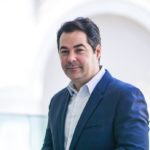
Paulo Henrique Castro
Chair: Paulo Henrique Castro - Technology and R&D Director / TV Globo
Engineer by the Pontifical Catholic University of Rio de Janeiro in 1996 (PUC-Rio). Working with Globo since 1996, where started on an internship program.
Responsible for the standardization of the Digitial TV in Brazil. -Coordinator of the Audio and Video Coding Working Group of the SBTVD Forum. -Chairman of the ABNTCommitee for Digital TV (Associação Brasileira de Normas Técnicas, Brazilian ISO Branch). -Contact point for Subgroup A – Specifications, on the Brazil-Japan Joint Work Group for Digital Television iniciative -Member of SET (Sociedade Brasileira de Engenharia de Televisão) since 1996. Also a member of many societies of IEEE(CommSoc, BTS, MTT, CE) and SMPTE
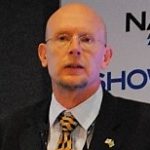
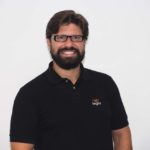
Pat Griffis - President of SMPTE / Vice President Technology, Office of the CTO at Dolby Laboratories
As Technology Vice President in the CTO Office at Dolby, Patrick Griffis is charged with helping define future technology strategy for the company which includes identifying and tracking key technical trends, performing technical due diligence, and supporting advanced technology initiatives for the company. He has been an active company spokesperson on the topic of next generation imaging and in particular, “better pixels” - a term he coined for High Dynamic Range plus Wide Color Gamut. Before joining Dolby, Pat spent 10 years at Microsoft leading global digital media standards strategy, including adoption of the Digital Living Network Alliance as a baseline media sharing standard in Windows 7 and standardization of Windows Media Video technology as an international SMPTE standard. Prior to Microsoft, Pat spent 15 years at Panasonic in senior management positions, including Vice President of Strategic Product Development at Panasonic Broadcast where he drove Panasonic’s HDTV strategy for the US. Pat started his career at RCA, earning eight patents in TV product design.
SMPTE Standards Deep Dive
Get an update on the SMPTE standards organization, current standards development efforts in SMPTE and learn how SMPTE standards development is adapting to the evolving technology landscape. As new technologies are introduced SMPTE has to transform its standards development process and support the move to more software based and IP based approaches. What SMPTE standards are supporting new image and audio formats, the underlying infrastructure and the new applications needed in the industry? How does SMPTE, as a global organization, interact with other industry organization worldwide?
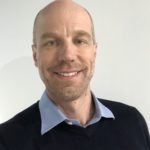
Thomas Bause Mason - Director of Standards Development -SMPTE
Thomas Bause Mason is the Director of Standards Development for the Society of Motion Picture and Television Engineers (SMPTE). At SMPTE he is responsible for maintaining the technical infrastructure for both the standards community and SMPTE home office. Bause Mason, formerly owner of Open Media Consulting, began his career in Cologne, Germany, as a computer programmer for automation software in the nuclear and automobile industries. Before his move to Los Angeles, Bause Mason worked at West German Television (WDR) and Cologne Broadcasting Center, where he led the quality control department. In Los Angeles, he became a postproduction consultant and then built and managed the encoding operations for Ascent Media. Joining NBCUniversal in 2005, he focused on emerging technology, spending two years in London to support the company's international business. Throughout his career, Bause Mason has assisted industry organizations in the development of standards, technical recommendations, and study group reports. He holds several patents and is a SMPTE Fellow.
|
Aug.26, 2019
|
Audiovisual Distribution |
Room 11
OTT Streaming: Challenges, Technologies, Services for building the Next Generation of Viewers
Salustiano Fagundes
TV stations and operators based on traditional models are facing the challenge of having to win over new viewer while retaining their existent bases, given the progressive and inexorable change of habits in the way videos are consumed.
The appearance of new players operating with OTT streaming has had a huge impact on the entire media and entertainment sector market, with forecast global revenues of US$ 64,78 billion in 2021, of which approximately US$ 3,59 in Latin America (Digital TV Research Forecasts/2018).
The fallout from this challenge is easily measured: in the subscriber TV sector alone, between November 2014 and May 2019 there was a loss of 2,9 million subscribers (ANATEL/2019). The decline in free-to-air TV audiences prompted the leading stations to launch their own streaming services in recent years in an effort that has required a speed of response from organizations which, from a cultural point of view, are slow to react, , almost always using the same ecosystem of traditional suppliers in an attempt to bring about change amidst a disruptive setting.
In this panel. We will discuss the scenario of the experiences in supplying OTT streaming, highlighting the challenges technologies, business model, services and innovations that are helping to be build a quality experience for users in a scenario where companies need to be strong competitors (while at the same time collaborating with each other.
Chair: Salustiano Fagundes - CEO - HXD OTT Solutions & Owner HIRIX Software Engineering
Entrepreneur in the area of technological innovation, founding partner of HIRIX Software Engineering and HXD Smart Solutions, a company that since 2007 has been "thinking and making the new television in Brazil". He is a member of SET Deliberative Council. He is a guest researcher at CITI (Interactive Center for Interactive Technologies) and LabArteMidia-Laboratory of Art, Media and Digital Technologies, both from the University of São Paulo (USP) ; and Ambassador of Campus Party, an organization that brings together a worldwide community of developers and makers with a mission of "building a new source code for the world."
HbbTV as an efficient alternative for providing multimedia and interactive OTT content delivery: overview, cases and strategies
The DVB standard, which pioneered the transition from analog to digital and SD to HD / UHD, has been exploiting the full potential of IP-based and RF-based broadcast hybrid delivery for connected TVs, set-top boxes and HbbTV-enabled multiscreen devices that enable broadcasters and operators to explore new services, including making OTT audio-visual content delivery as easy as on classic platforms
Technologies for the transmission and delivery of hybrid media, including DVB-T2, DVB-DASH and DVB-CSS, complemented with HbbTV-based services, are already in use in many countries inside and outside Europe and are becoming a alternative for traditional players to position themselves in an increasingly disruptive, interactive and competitive market.
In this session we will have an overview of how HbbTV is being used, know some success stories and their strategies for the future.
Stan Baaijens - DVB Chair PCM & Steering Board (CEO, Funke Digital TV)
Stan Baaijens is a second generation owner of Funke Digital TV after following his father’s footsteps by joining the Funke Company almost 40 years ago. Since 1992 his focus laid on understanding consumer needs, the broadcasting industry and the increasing market penetration of digital TV and by doing so Funke Digital TV was able to anticipate future market needs and opportunities. Nowadays, his mission is to build state of the art digital terrestrial reception solutions and deploy these extensively around the world. In 2015 Mr. Baaijens was appointed as DVB Steering Board member and since 2018 elected as Chairman of the DVB Promotion & Communications Module (PCM) at the EBU in Geneva. As a Steering Board member, Stan represents CE manufacturers within DVB and will strongly support the interest of CE manufacturers of Digital TV products by making use of his extensive market knowledge and network.
Five Steps – Machine Learnig & Artificial Intelligence for Delivering Streaming
The world is overflowing with digital media. As media executives, you’ll need to make sure viewers can find and play your content easily. This presentation is my top five list of how machine learning (ML) and artificial intelligence (AI) will help you design a better viewing experience, maintain technical best practices, plus at the same time make sure you can still run a profitable business.
Nadine Kerfatz - OTT Management Consulting & Founder Reality Software
Nadine is an industry expert in business models and technologies for OTT and help media and technology companies win customers with everything needed to build digital video and the next generation TV experience: the tech, business and design. She has a great experience with manage projects, define strategy and write about innovation for industry publication Streaming Media Magazine.
Building and Evolving a Streaming OTT Platform in Brazil: An Overview of Technology, Regulatory, and Business Challenges
Building, maintaining and developing an OTT Streaming service in Brazil that provides a quality experience with diverse content has been a huge challenge that Encripta decided to embrace in 2015, when it launched a platform for distribution and delivery of movies and series – Looke, which uses business models based on SVoD (subscription) and TVoD (transactional) and was the first streaming platform in Latin America to offer video downloads offline.
In this session, we will find out about the experience of the entrepreneurs of Looke who, rowing against tide of a series of obstacles encompassing high risk for those investing in innovative technologies in Brazil, including regulatory uncertainty and the growing competitiveness of the Brazilian market with the arrival of new players, managed to establish a foothold and occupy new spaces.
Luiz Bannitz - Business Director of Fitness Channel | Encrypt | Looke
Luiz Bannitz is an economist, lawyer and business administrator. His passion for bridging history and technology led him to strategic positions at companies such as HBO Brazil, EMI Music and GEO Eventos, where he worked as a director. He is currently Director of Business for Fitness Channel, Director of Business Affairs at Encripta and Director of Business and Content for Looke.
The pay-TV industry is in the midst of tremendous disruption
New technologies are allowing for an unprecedent number of services, and for very fast deployment schedules. Globally, media consumption is rapidly growing and disrupting the traditional ways of securing, monetizing, and delivering video content and its associated services. This new environment requires operators and media companies to leverage existing architecture investments to deliver a range of offerings to consumers, from entry-level to premium services. At the same time, when and if economics begin to shift and allow for renewed architecture investment, a transition to the cloud should be considered. This session will engage in a transparent discussion on finding the right balance when blending broadcast and IP delivery.
Fabio Souza - Solutions and Marketing Latam - Synamedia
Fabio is a technology executive and entrepreneur with a strong bias to execution, combining 20 years of experience in start-ups, consulting, media, service provider, and technology companies including DirecTV Group, NET Brasil (part of America Móvil) and GVT (acquired by Telefonica), lastly at Cisco driving the transformation team of the Video Business. At Synamedia since October 2018, he is heading LatAm strategy, marketing programs, products, and partners.
|
Aug.26, 2019
|
Audiovisual Distribution |
Room 13
Terrestrial Transmission Infrastructure Sharing: The Road to Deep Brazil Digitization – Strengthening Partnerships and Developing Innovative Solutions
Valderez Donzelli
Chair: Valderez de Almeida Donzelli - SET Deliberative Council / Technical Director of ADTHEC
Holds a degree from the industrial school of engineering (FEI) in electronic engineering, power engineering and production. She obtained a Master’s in electrical engineering, defending the dissertation “Polarização Elíptica: Influência no desempenho de cobertura da TV Digital” (free translation, Elliptical Polarization: Its influence on the coverage performance of Digital TV”, and is reading for her doctorate with the survey ” Digital TV: Signal Coverage”, both from the Mackenzie University. She also holds a specialization in IT from FESP, ICT management from the FGV and Advanced Digital TV Systems, from INATEL. Technical Director of ADTHEC (www.adthec.com.br), a company offering consultancy, planning, design, research and analysis of risks and solutions for public and private sector radio, television and telecommunications stations, with the emphasis on the design and installation of digital and FM transmission systems. She has headed up studies, tests and measurements involving the systems for implementing digital TV in Brazil, as well as the group that reviewed the regulations for sound and picture broadcasting services.
Co-chair: Camilla Cintra - Executive Supervisor of Broadcasting Projects Area at TV Globo
Camilla Cintra holds a degree in Telecommunications Engineering from PUC-Rio and an MBA in Project Management from Fundação Getúlio Vargas. She is currently Executive Supervisor of Globo's Broadcasting Projects Area, manager of the team responsible for Digital Coverage Expansion in Globo's five markets, leading ABERT's Infrastructure Sharing group and part of the SBTVD Forum's discussion group that is challenged to create a viable model for the digitization of the 4000 municipalities that will have the analog signal turned off in the interior of the country in 2023.
Alberto Leonardo Penteado Botelho - Project Engineer at LM Telecomunicações
Alberto Leonardo Penteado Botelho holds a Master's degree in electrical engineering from Mackenzie Presbyterian University. Graduated in Electrical Engineering, Telecommunications mode, from Paulista University, specializations in Digital Television Systems Engineering from the National Telecommunications Institute, Telecommunications Network Engineering from the National Telecommunications Institute and MBA in Project Management from the Getúlio Vargas Foundation. He currently works at LM Telecomunicações (RecordTV group) as a project engineer.
Alexandre Vila - Broadcasting Manager of TV Bandeirantes SP
Graduated in Electrical / Electronic Engineering from the Barretos-SP Educational Foundation and Electronic Technician from ETEP - SJ dos Campos-SP, he is an experienced broadcast professional with 19 years of experience in the areas of radio and television, project engineering management and broadcasting systems, satellite communications, audio / video compression, planning and deployment of ISDB-t terrestrial transmission systems. He has developed his career in reputable companies such as CEETPS, SHARP, NET, BAND, SKY Brazil, TV Zimbo-Angola in Africa. He is currently Broadcasting Manager at TV Bandeirantes SP, managing the signal distribution / contribution area, Uplinks, and expanding digital signal coverage in SP and in the Band network.
José Frederico Rehme - Professor at Positivo University / Coordinator of SET Membership and Events Committee
José Frederico Rehme is Coordinator and Professor of Electrical Engineering and Energy Engineering at Positivo University and Director of Engineering at TVCi.
Ivon Luiz Pinto Júnior - Engineering Manager at TV Cultura
Electrical engineer with emphasis in electronics, has been working at TV Cultura since 1985 where he currently holds the position of Engineering Manager. Coordinated the implementation works of TV Cultura's own Digital TV network in the state of São Paulo (230 sites) and configurations of SFNs networks with satellite reception of compressed BTS. Participated in the working group of the project of sharing TV broadcasting systems of TV Cultura tower in São Paulo (Sumaré). Manages the areas of infrastructure, audio / video capture, content distribution (IP, satellite and MO), Broadcasting, digital TV systems and Technical Centers, with activities in maintenance and projects.
Emerson Alexandre Fonseca Costa - Regulatory Project Manager at Grupo RBS
Graduated in Electrical Engineering from UFSC - Federal University of Santa Catarina, Postgraduate in Telecommunications from UFPR - Federal University of Paraná and Bachelor of Law from PUC-RS - Pontifical Catholic University of Rio Grande do Sul. Has been with RBS TV since 2012. He is currently Regulatory Project Manager and NOC TV and Radio of Grupo RBS.
Fernando Gomes de Oliveira - Project Management and Planning - Seja Digital (Be Digital)
Fernando Gomes de Oliveira has been working in the telecommunications and broadcasting sector since 1996, promoting technical solutions to the main TV stations, pay-TV operators and local Internet providers.At Be Digital, he is responsible for the management and planning of TV channel repacking projects with the goal of releasing the 700MHz band, enabling the implementation of 4G / LTE networks.
André Bertoldo - Technical Coordinator of TV Alterosa
André Bertoldo holds a bachelor’s degree in Civil Engineering from Faculdade Doctum and holds an electronics technician certification from Senai. He has worked in telecommunications for 14 years, commencing his career at TV Alterosa, an affiliate of SBT, before moving to Record Minas TV and, in recent years, Technical Coordinator at TV Alterosa. He is also responsible for developing projects in the area of Digital and analog TV and for the installation and field maintenance of relay systems for TV signals.
|
Aug.29, 2019
|
Audiovisual Distribution |
Room 11
The Future of TV, OTT and Streaming Satellite in the Age of Cloud, AI and 5G
J.R. Cristóvam
There is no doubt that practically almost all television companies the world over have used and still use communication satellite services to contribute, distribute and deliver high-quality audiovisual content with incomparable reliability and availability. In this age of the cloud, artificial intelligence and 5G, everything “software defined” and a series of new technologies, some evolutive, others disruptive, the satellite industry has been reinventing itself to continue attending to this very important segment of the market.
On this panel, satellite operators will put forward their proposals and offers of innovation that adhere to this era, so as to effectively collaborate with the present and future of TV, OTT and Streaming.
Chair: J.R. Cristóvam - Technical Director - UNISAT
He has been active in satellite communications since 1983, having headed up project teams on several occasions. Associate Director and one of the founders of UNISAT in 1990. He is the company’s technical director and a senior consultant to Brazilian and international companies. Before founding UNISAT, he worked at NEC, TELEBAHIA and EMBRATEL in the National and International areas, in communications via the Brasilsat and Intelsat satellites, having been a member of the Domestic Satellite Communications Department, known as SAT.He is an Operations Engineer in Electronics, from the School of Engineering of the UGF, a Graduate Degree from the UFF in Telecommunications, specialization courses in Japan (NEC, NTT and Anritsu) and in the USA (TCB – Thomson).
Eutelsat Cirrus
Eutelsat CIRRUS, an easy-to-use fully integrated content delivery platform. Designed to overcome the challenges inherent to building a content distribution company, Eutelsat CIRRUS is the reliable, high-quality and economical answer for TV stations to see their content in more homes.
The complete and fully supported content delivery solution will provide videos and channels anywhere, help TV channels meet their clients’ growing expectations for flexible content integrated on different screens, with analyses for better returns on the content.
Ricardo Calderon – Sales Director at Eutelsat do Brasil
Degree in electrical engineering from the Mauá School of Engineering, has 30 years of experience in the communications market for satellite, broadcast and PayTV. He has been the Sales Director at Eutelsat do Brasil for the video market since 2015.
Video is transforming the world. Are you ready?
The video market landscape has been changing rapidly over the years and shows no signs of slowing down. Increased viewer expectations and changing video consumption trends have required content providers to find innovative ways to deliver high quality, accessible video content across multiple devices and platforms globally. Stay current with trends and learn how you can prepare your content delivery and contribution network for the future of video service broadcasts.
Marcelo Amoedo - Director of Sales - Broadcast Division, Intelsat
Marcelo Amoedo is an experienced telecommunications professional with 17 years of experience in the areas of television, satellite communications, video compression and transmission systems integration, business development, key account management, direct sales and resales, networking and relationship. Acted as sales and business development manager for STI Telecom and MB SkytechSales Account Manager. At Intelsat, he is responsible for the commercialization of space segment capacity for occasional use and broadcast services. Graduate in the MBA of Digital TV, Broadcasting and New Media from UFF - Fluminense Federal University, graduated in Administration and Computer Networks from Universidade Estácio de Sá.
New technologies keeping satellite relevant in new video distribution ecosystems
A quick overview of solutions that use satellite for video distribution infrastructure in the era of streaming, VOD and 5G.
Jurandir Pitsch – Vice President Sales – SES
Jurandir Pitsch is a postgraduate electronics engineer from Unicamp. He worked at Telebrás CPqD as a satellite researcher for 11 years. He later worked at Comsat Brasil in various positions in engineering, operations, product marketing and sales. Since 2003 he has been with SES in sales and business development. He is currently Commercial Vice President of Video for Latin America.
Low Cost and Live Satellite News Contributions - Ka Band and Ku Band
InternetSat will summarize the evolution of field broadcasts to date with real and objective examples and provide a benchmark for quality, cost and mobility. As an example of video and streaming broadcasts, shows the last solution to streaming video and its quality, especially when the point is not only to use the Mochilink and no more C-band, that is, address high-capacity satellite use and state-of-the-art (HTS) band Ka and Ku band, focusing on occasional journalism.
George Bem, Ceo & Founder – InternetSAT
George Bem is CEO and founder of InternetSAT, an integrated solutions provider and broadband internet operator via satellite, fiber and telephony. He holds a degree in Telecommunications Engineering from FASP, and specializations in Business Management from the Getúlio Vargas Foundation. He holds a graduate degree and certificate in Mission-Critical Environments and Project Management from the PMI and Scrum Alliance. Among other positions, he was Infrastructure and Engineering Services Manager at Rede Record TV, where he was responsible for the integration of new technologies and the implementation of the IP environment, data and telecommunications networks, mobile solutions for video and data transmission in which he structured the transmissions of the 2011 Pan American Games in Guadalajara, the 2012 London Olympics, the 2014 Sochi Winter Olympics, the 2015 Toronto Pan American Games and the 2016 Rio Olympics.
The Future of Satellite TV - Multiservice Platform and Satellite Dish Digitization
Embratel Star One, with the arrival of the new Star One D2 satellite, will expand the Parabolic Digitalization plan, adding technological innovations not only in satellites, but also on the ground, enabling an even greater number of video signals and improving the quality of reception on more than 20 million parabolic antennas pointed at the 70°W position.
Antônio Paolino Iannelli - Engineering Manager at Embratel Star One
Engineering Manager at Embratel Star One, Antônio Paolino Iannelli, Electrical Engineer with specialization in electronic systems graduated from UERJ (State University of Rio de Janeiro) and postgraduate in telecommunications systems from PUC-RJ (Pontifical University). Rio de Janeiro), with 35 years of experience in satellite communications systems, including specification of communications subsystems and related ground and network systems.
New Push VOD Services from Hispamar Satellites
In this talk, HISPAMAR will introduce the satellite on-demand video (Push VoD) solution, which enables broadcasters to provide a complete user experience by combining the enjoyment of on-demand content with that of linear TV.
Sergio Chaves - South America Business Director - Hispamar Satellites
Sérgio Chaves began his career in the telecommunications sector in 1988. He worked in large companies as responsible for medium and large accounts and for development of new businesses, marketing voice, data and infrastructure products aimed at the corporate and carrier markets. Since 2003, Hispamar Satelites, a Brazilian operator that markets the services of the Hispasat Group in the Americas, has developed new markets for satellite services such as distance education and indoor satellite media. In 2012, Sérgio Chaves, until then commercial director for Brazil, assumed the business direction of Hispamar for South America.
|
Aug.29, 2019
|
Audiovisual Distribution |
Room 11
Cloud Computing: Innovation and Transformation Strategy
Gilvani Moletta
With the advancement of Digital Media consumption, broadcasters and content producers must change their strategies frequently.
Cloud computing technology is a premise for the demands of the complete flow of digital content.
The conference will be attended by top experts on the subject where all flow will be explored from the current infrastructure transition to “Cloud Computing”, through the Application Virtualization processes to the use of “Big Data”.
Topics such as OTT, Artificial Intelligence, CMS, Optimization and Personalization of the User Experience in Streaming Services in this Cloud Computing Digital Media universe will also be explored.
Chair: Gilvani Moletta - Independent Consultant
Telecommunications Engineer, with experience a in the areas of Telecommunications, Broadcasting and IT. Certified PMP, also certified in network certification and specialist on special television shows. Leadership of operational teams, Engineering and IT, focusing on Research, Development and Innovation. Electronic Engineer Specialist in Digital Signal Processing; MBA in Project Management, IT Management.
Bringing the OTT video experience to all audiences in Brazil through ISPs
With a mission to bring the OTT video experience to all audiences in Brazil through ISPs, Watch Brazil wants to innovate and differentiate itself by providing unprecedented levels of control and automation in the on demand video and TV content user experience. The innovation roadmap of our platform is clear: we increasingly want to mix human editorial curation with artificial intelligence-based personalization. On the one hand the specialized curatorship for defining the catalogs with the analytics based business intelligence and on the other using machine learning to build a richer profile of each of our customers and provide a unique and individualized experience.
Maurício Almeida - CEO at Watch Brasil
Studied electrical engineering at Mackenzie in SP, Marketing at São Paulo Business School and Theology at FTBP-PR, has over 25 years of experience in IT projects, infrastructure and hardware and software development support, acting as Business Developer.
Led the development of one of Brazil's first e-commerce, IG Shopping, IG Flores and IG Pizza, in the early 2000s in partnership with Banco Opportunity.
Over the past 10 years focused on the technology convergence industry, has developed new solutions involving hardware and software for TVIP and Digital TV, ISDBT.
Until October 2016, he chaired Nova Telecom, a group of ISPs operating in Paraná, Santa Catarina and Mato Grosso, leaving to develop new projects, including Watch Brasil TV & Entertainment
Strategies in Cloud Computing Adoption
The Cloud Age brought infinite possibilities of new business to Content and Service Providers, converging technologies, concepts, trends and competition that were following its own path before. This session will explain how you could make your digital transformation protecting your past investment, reducing operational costs with a single platform to address all means of distribution and what approaches to be adopted to speed up your time to market, a critical success factor to survive across and beyond the clouds.
Edmar Moraes - Head of Sales Latin America – Synamedia
Edmar combines 20y of experience helping Service Providers and Media companies to transform the way people get entertained. He brings knowledge in End-to-End (turn key) solution for Broadcast and Broadband, and now connecting both worlds. He has managed projects globally around Digital TV (DVB/IP), MobTV in Switzerland (SwissCom), Canada (Bell ExpressVU), Italy (Vodafone), Chile (GTD), Peru (Telefonica), Mexico (TV Azteca), Central America and Brazil (NET/Claro, TVA, Oi, GVT/Telefonica)
Creating agile infrastructures through virtualization
As the broadcast and IT industry continue their steady merge and as content consumption continues to evolve, it’s clear that hardware-based networks will eventually cease to meet the needs of future demands in the industry.
The shift towards IP-based workflows is a stepping stone towards virtualized infrastructures where resources can be scaled up or down virtually as needed. This allows for more flexible and agile production operations that are more responsive to ever-changing requirements.
Benoit Quirynen explains the different modes of deployment for broadcasters looking to rely less on hardware. He describes how virtualization can help create more agile workflows while making sure the software applications continue to operate with the reliability that is expected for the production of live programs.
Benoit Quirynen - Chief Market Officer EVS
After 25 years in Telecom, including 7 years deeply involved within TV and advertising products as product director and venture founder, always surfing at the edge of technology innovations, Benoit joined EVS in 2016, taking the responsibility of product management and marketing at EVS. Passionate about media & technologies, still developing code as a passion, Benoit is proud to participate every day to the industry transformation for what concerns the production of live content within a market leading company as EVS. EVS takes it as its duty to leverage technology evolutions to contribute to the resolution of the huge challenges faced by the broadcast industry: produce more with less.
Case SBT - New Cloud and UX Website
Case: SBT had the challenge of renewing its site and expand ties with channel fans. In partnership with ilegra, broadcaster optimized its page and increased the number of unique users with the latest technologies. The six-step project and just nine months of deployment rewrote the entire SBT site structure based on cloud solutions.
Marcio Eduardo Souza da Silva - Alliance and Business Developer - ilegra
Creator of profitable operations in the technology sector. Degree in mathematics with emphasis in computing, future Bachelor of Business Administration, postgraduate degree in Marketing, Business Communication and Cloud Computing. For 29 years understanding and converting information technology into value.
Cloud solutions to reach new viewers
Average TV consumption among 12-34 year olds has decreased by almost 40% in recent years. Younger viewers are consuming video - and a lot - but on other platforms. How can broadcasters access these platforms and monetize it?
Jeff Fenley - Commercial Director LATAM - GRABYO
Master of Business Administration, Jeff has nearly 20 years of media experience in Mexico, Central and South America. His experience includes commercial work at dot-com companies, journalism agencies, sports statistics providers and cloud solutions. Jeff joined Grabyo's team as Commercial Director at Latam to open the region for the British company.
|