Call for Papers – SET International Journal of Broadcast Engineering (SET IJBE) – 1st Edition

This panel will highlight a selection of scientific papers submitted to the Call for Papers promoted annually by SET. The chosen studies will be published in the SET International Journal of Broadcast Engineering (SET IJBE), an international scientific journal dedicated to disseminating knowledge in communication engineering, especially in the areas of broadcast and new media. The SET IJBE aims to cover current research that represents the state of the art in these technologies.
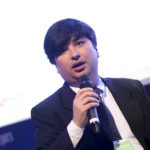
Chair: Cristiano Akamine, Professor and Researcher, Digital TV Laboratory, School of Engineering, Mackenzie Presbyterian University | SBTVD Forum Technical Module

Received the B.Sc.degree from Mackenzie Presbyterian University, Sao Paulo, Brazil, in 1999, and the M.Sc. and Ph.D. degrees from the State University of Campinas, Sao Paulo, in 2004 and 2011, respectively,all in electrical engineering. He is a Professor of Embedded Systems, Software Defined Radio, and Advanced Communication Systems, Mackenzie Presbyterian University. Since 1998, he has been a Researcher with the Digital TV Research Laboratory, Mackenzie Presbyterian University, where he had the opportunity to work with several digital TV systems. His research interests are in SoC for broadcast TV and software defined radio.

Coexistence of Gap Filler System and 5G in Optical Network

Single channel radiofrequency (RF) repeater systems, also known as “gap filler” and used for broadcasting, typically suffer from interfering wave (echo) at the repeater station. This work exploits a solution based on radio over fiber (RoF) to eliminate this problem and reports a coexistence analysis between gap filler system and the fifth-generation (5G) mobile communication in optical network. Experimental results show, after 25 km of fiber optic transmission, echo absence and modulation error ratio (MER) above 40 dB for the repeater system aimed for digital TV, as well as error vector magnitude (EVMRMS) below the limits established for a 5G New Radio signal at 3.5 GHz. The obtained results illustrate the potential of taking advantage of existing optical infrastructure to deploy RoF-based gap filler systems, coexisting peacefully with other technologies.

Speaker: Ramon Maia Borges, Adjunct Professor at UNIFEI (Federal University of Itajubá)
Ramon Maia Borges received the Ph.D. degree in electrical engineering from the Federal University of Itajubá (UNIFEI), in 2020, the M.Sc. degree in telecommunications from the National Institute of Telecommunications (Inatel), in 2015, and the B.Sc. degree in electrical engineering from Inatel, in 2012. He worked as a Researcher with the Radiocommunications Reference Center and Wireless and Optical Convergent Access Laboratory at Inatel, from 2015 to 2021, year in which he became professor at this Institute. He is currently a Professor with UNIFEI, working at the Institute of Systems Engineering and Information Technology. His research interests include 5G networks, broadcasting and optical-wireless systems.

Features and Applications of ATSC 3.0 Transmitter Identification (TxID)

Transmitter identification (TxID) is uniquely assigned to each transmitter to identify and control the transmitters in Advanced Television Systems Committee (ATSC) 3.0 broadcast networks, especially on a single frequency network (SFN). A transmitter also generates the TxID signal in addition to the ATSC 3.0 host signal but combines them, resulting in interfering with each other. This paper summarizes the TxID technique in ATSC 3.0 physical layer standard, including the detection performance, influences on the host ATSC 3.0 signal, and applications.

Speaker: Bo-mi Lim, Senior Researcher - ETRI (Electronics and Telecommunications Research Institute) Korea

Bo-mi Lim is a Senior Research Engineer of Electronics and Telecommunications Research Institute (ETRI), particularly contributing to the Media Research Division. Her research interests are in areas of wireless communication system design and digital broadcasting.

Roads of MIMO Broadcasting: An Overview of Variant Technologies

This paper outlines ATSC 3.0 MIMO broadcasting technologies in terms of three variants: 1) Frequency Reuse-1 MIMO, 2) Backward-Compatible MIMO, and 3) Channel Bonding & MIMO. Through a brief discussion of their principles, features, and use cases, this paper sheds light on the diverse paths of MIMO broadcasting paved for the future of digital broadcasting systems. Furthermore, the paper discusses the implications and potential advancements of these technologies, emphasizing their role in achieving higher data rates and improved flexibility.

Speaker: Sung-Ik Park, Principal Researcher & Project Leader - ETRI (Electronics and Telecommunications Research Institute)

Sung-Ik Park (IEEE Fellow) has been with the Broadcasting System Research Group, Electronics and Telecommunication Research Institute (ETRI) since 2002, where he is Project Leader and Principal Member of Research Staff. His research interests are in the area of error correction codes and digital communications, in particular, signal processing for digital television. He has over 300 peer-reviewed journal and conference publications, and multiple best paper and contribution awards for his work on broadcasting technologies. He currently serves as an Associate Editor for the IEEE TRANSACTIONS ON BROADCASTING and ETRI Journal, and a Distinguished Lecturer of the IEEE Broadcasting Technology Society. He also serves as the chairman of the BTS Daejeon chapter and a member of the IEEE BMSB International Steering Committee. He is a recipient of the 2024 ATSC’s Mark Richer Industry Leadership Medal.  

System Verification of Advanced ISDB-T

Advanced ISDB-T is the next generation DTTB system recently developed in Japan. In this presentation, the feasibility and matureness of the system are shown with an introduction of End-to-end verification tests using experimental transmitter station.

Speaker: Kohei Kambara, Chief of Advanced Transmission Systems Research Division at NHK | STRL

Kohei Kambara received BE and ME degrees in electrical and computer engineering from Yokohama National University, Kanagawa, Japan, in 1999 and 2001. He joined NHK in 2001. From 2001-2009 and since 2019, he has been working for NHK STRL. He is a Chief of Advanced Transmission Systems Research Division and is engaged in the development of next-generation broadcasting systems.

Amplifying In-Vehicle DTV Entertainment: ATSC 3.0 Broadcast Signal Relay via WiFi Gateway

This paper presents the relayed distribution of ATSC 3.0 broadcast signals to mobile users in moving vehicles. The gateway relay featured in this work seamlessly converts received ATSC 3.0 signals into a WiFi interface. This proposal exhibits the use of an ATSC 3.0-to-WiFi gateway to amplify broadcasting media in automotive, allowing personalized experience on individual seat positions.

Speaker: Sungjun Ahn, Senior Researcher - ETRI (Electronics and Telecommunications Research Institute)

Sungjun Ahn is a Senior Research Engineer of Electronics and Telecommunications Research Institute (ETRI), particularly contributing to the Media Research Division. His research group has driven the system design, field verifications, standard activities, and theoretical analyses for ATSC 3.0 broadcasting and other wireless applications. He currently participates in research activities on the physical layer of ATSC 3.0 and 3GPP DTTs, with special interests in mobile media, interworking between DTT and 5G, and DTT-related advances for enhanced media distribution and beyond.

Advancements in DTT Broadcasting showcasing TV 2.5 and TV 3.0 during the Football World Cup 2022

A first showcase focuses on selected technologies adopted in TV 3.0, the next-generation TV broadcast standard set to be launched in Brazil from 2025, including Versatile Video Coding (MPEG-I VVC), Low Complexity Enhancement Video Coding (MPEG-5 LCEVC) and MPEG-H Audio using Dynamic Adaptive Streaming over HTTP (DASH). These technologies were employed in an end-to-end live production, delivering 4K HDR video with immersive and personalized audio. The demonstration highlighted the rapid maturity of these technologies, implemented in both hardware and software solutions.
The TV 3.0 showcase, a collaboration between SBTVD Forum members and their partners, featured the first TV supporting VVC, LCEVC, and MPEG-H Audio, along with a user interface for interactive content and immersive sound experiences. This represents a significant step towards a better viewing experience, enabling the distribution of current and future formats, including 8K resolution, HDR, and Next-Generation Audio (NGA) through OTA and OTT streaming platforms.
The second showcase focused on the current TV 2.5 standard by adding backward-compatible technologies to serve legacy receivers while introducing new features for new receivers. The demo deployed for the first time MPEG-5 LCEVC to provide a live 1080p60 HDR enhanced channel starting from a legacy AVC 1080i30 SDR channel.

Speaker: Simone Ferrara, SVP Technology & IP Strategy at V-Nova

Simone Ferrara is an engineer and European patent attorney with two decades of experience spanning wireless communications, intellectual property, and video technology. Beginning his career as a researcher in signal processing and telecoms, he went on to lead IP strategy at Vodafone and serve in multiple leadership roles at the Chartered Institute of Patent Attorneys. Since 2015, Simone has shaped V‑Nova’s legal, operational, and technology direction, currently serving as SVP of Technology and IP Strategy. He drives the company’s innovation and standardization efforts — including MPEG-5 LCEVC — ensuring technical excellence is matched by commercial readiness.