TV 3.0 (DTV+): Applications, Accessibility, and Viewer Experience

This workshop focuses on the key aspects that directly impact user experience in TV 3.0 (DTV+), covering interactive applications, accessibility, signal reception, and device integration.

TV 3.0 represents a significant evolution of Brazilian digital television, incorporating technologies that enable personalized, interactive, and accessible experiences, as well as greater signal efficiency and support for new content distribution models.

The workshop will feature three technical presentations:

  • Application Layer
  • Accessibility and Emergency Alerts
  • Receivers and Implementations

The session will close with a Q&A segment, fostering interaction with the attending technical audience.

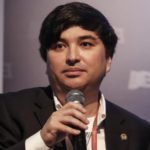
Chair: Cristiano Akamine, Professor and Researcher, Digital TV Laboratory, School of Engineering, Mackenzie Presbyterian University | SBTVD Forum Technical Module

Received the B.Sc.degree from Mackenzie Presbyterian University, Sao Paulo, Brazil, in 1999, and the M.Sc. and Ph.D. degrees from the State University of Campinas, Sao Paulo, in 2004 and 2011, respectively,all in electrical engineering. He is a Professor of Embedded Systems, Software Defined Radio, and Advanced Communication Systems, Mackenzie Presbyterian University. Since 1998, he has been a Researcher with the Digital TV Research Laboratory, Mackenzie Presbyterian University, where he had the opportunity to work with several digital TV systems. His research interests are in SoC for broadcast TV and software defined radio.

 Inside DTV+: An Application-Oriented Platform

The presentation outlines how broadcasters announce their applications within the TV 3.0 ecosystem, highlighting the role of Bootstrap Applications as the entry point for content consumption, delivered through the Persistent Player. It will detail how Bootstrap Applications are organized and prioritized in the Application Catalog, in accordance with guidelines established by local regulations. The presentation will also address the mechanisms for Privacy Record Request via SLS signaling, as well as the triggering of Audience Measurement Sessions through the signaling of the Bootstrap Applications themselves, both implemented as native functions of the Platform. Finally, it will explore how viewers can be navigated from Bootstrap Applications to Broadcaster Applications, either automatically or through explicit selection via the Application Catalog’s Access Panel, providing a comprehensive view of the technical and regulatory flows that shape the viewer experience on the DTV+ Platform.
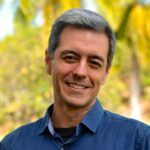
Speaker: Marcelo F. Moreno, Associate Professor, Federal University of Juiz de Fora (UFJF) | Technical Module of the SBTVD Forum

Associate Professor at the Federal University of Juiz de Fora (UFJF), Brazil, with a Ph.D. in Computer Science from PUC-Rio and expertise in multimedia systems and computer networks. He was a Visiting Professor at the International Audio Laboratories Erlangen (FAU/Fraunhofer IIS) in 2022–2023. He co-edited ITU-T Recommendation H.761 (“NCL and Ginga-NCL”) and has contributed to several international standards, having chaired ITU-T working groups for over a decade. Since 2015, he has coordinated the Application Coding Working Group of the Brazilian Digital TV System Forum (SBTVD), where he also serves as editor of ABNT standards for TV 2.5 and TV 3.0. His research bridges academic innovation and standardization, with a focus on application-oriented broadcasting, second-screen integration, audience measurement, and privacy-aware media platforms for next-generation digital TV.

Accessibility and Emergency Alerts in TV 3.0

The presentation will highlight the mandatory system features, including sign language support directly in the broadcast signal, audio description and captions, as well as public emergency alert systems that leverage broadcast infrastructure to ensure wide coverage during critical situations.

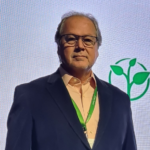
Speaker: Guido Lemos, Full Professor at the Center for Informatics at UFPB | Secretary of Science and Technology of João Pessoa

PhD in Computer Science from the Pontifical Catholic University of Rio de Janeiro (PUC-RIO). He coordinates LAVID (Research and Extension Center in Digital Video Applications), where he conducts research in the following areas: digital television, digital cinema, distributed multimedia applications, video distribution networks, distributed artistic performances, accessibility, information security, fake news, telehealth, and blockchain applications. He participated in the development of the Ginga middleware, published as ITU-T and ITU-R recommendations, and adopted as the standard in the Brazilian Digital Television System and in several other Latin American countries. Its implementation is a software currently installed on approximately 100 million TV sets. Other highlights of his research include the development of a system for storage, transmission, and display of 4K 3D videos called Fogo Player; the development of a platform to support distributed performances in dance, theater, and music called Arthron; the development of video servers for live and on-demand streaming, called DLive and DVod, which were used in RNP’s Digital Video Network and in USP-SP’s IPTV service; the accessibility software VLibras (used on the websites www.brasil.gov.br, senado.leg.br, and câmara.leg.br), executed 1.5 billion times per year; the development of technologies for registration, validation, and preservation of Digital Diplomas based on blockchain, which will be used in 270 public universities in Brazil; and finally, the development of the V4H health video system, which uses digital signature technologies, blockchain registration, and preservation to enhance security in the use of videos generated during medical consultations. He was the coordinator of the REUNI program at UFPB and participated in its creation and implementation, resulting in an increase from 20,000 to 45,000 undergraduate and graduate students. He also serves as a member of the Deliberative Council of the Brazilian Digital Television System Forum and is a guest of Ancine’s Technical Accessibility Chamber.

Receivers and Implementations: Challenges and Advances in TV 3.0

Receivers and Implementations, which will address regulatory definitions and technical challenges to ensure interoperability between manufacturers and broadcasters. A general overview of the TV 3.0 receiver standard will be presented, including the types of receivers defined as well as the specified receiver profiles that organize functionality requirements according to device capability.

The session will also discuss the expected challenges in implementing TV 3.0 receivers in Brazil and outline the remaining next steps to ensure compatibility of products that will incorporate the DTV+ stack.

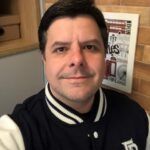
Speaker: Luiz Gustavo Pacola, Technical Specialist at SIDIA | Coordinator of the Receiver Working Group at the SBTVD Forum | Member of the Technical Module of the SBTVD Forum

Holds a Bachelor's and Master's degree in Electrical Engineering (Computing) from Poli-USP, and an MBA in Information Technology Management from FIA, with over 20 years of experience in the Media, R&D, and Consumer Electronics sectors. At SIDIA, he has been working on the Visual Display team since 2009, where he led teams in R&D projects in collaboration with universities. He has been involved in activities related to new business development, promoting technologies developed by SAMSUNG, including SAMSUNG TV Plus (FAST channels) and TV Key (Pay TV), a technology that incorporates set-top box functionalities into Smart TVs. In the context of Digital TV, he has collaborated with TV standardization and regulatory organizations in Latin America, as well as ecosystem partners. He is a member of the Technical Module of the SBTVD Forum, where he was responsible for technical leadership in delivering the first releases of the Ginga middleware Test Suite. As part of the TV 3.0 (DTV+) journey, he acted as a proponent of technologies such as HDR10+ for dynamic HDR and Sign Language via Motion Stream for accessibility—both adopted for TV 3.0—and has provided support throughout all phases of the standardization process. Since 2023, he has led the Receiver Working Group of the SBTVD Forum.